2011年12月4日日曜日
Gifts That Show You Care - Instead of a present, donate on someone's behalf!
This is a nice article Kristof of the New York Times.
I ask my relatives to donate to causes rather than buy me presents.
Really, I mean, almost all of us in the US and Japan have everything we need.
http://www.nytimes.com/2011/12/04/opinion/sunday/kristof-gifts-that-say-you-care.html?_r=1&nl=todaysheadlines&emc=tha212


Never Let Me Go (2010) Directed by Original by K. Ishiguro
Just saw this, in connection with the beginning of the bioethics unit that I am going to be teaching from tomorrow in my ICU class.
The bioethics connection is that the characters in this movie are humans who have been raised as organ donors. They will be used for organ harvesting.
This is similar to the concept of the 2005 movie, The Island.
However, the movie Never Let Me Go, which is based on the acclaimed 2005 novel of the same title by Kazuo Ishiguro, is more than a bioethics SF film.
If fact, I would argue that it does not fit the genre of SF. It is much more. The file is not really about the ethics of using humans as organ donation machines. That is the main characteristic of the lives that the characters are living, but this is just a background theme that Ishiguro uses to explore other themes of human existence and relationships.
I thought the main theme is how we accept and deal with the time limit of our own existence. As Kathy, the protagonist, ponders at the end, there isn't so much difference between us (non-donor humans), and them, who were created to live, give, and die when they have completed giving. We live, have freedom to some extent, and give ourselves to others, sometimes voluntarily, sometimes with no choice, and them we are "completed," as the donors called it when they die from their final donation operation.
What has Ishiguro said about this novel? Why did he write it? I am curious and want to read the original.
YOU: A Course of Personal Writing -- My Reflection
After autumn term, the break flew by with various conferences and family obligations. I wanted to look back at my new course for ICU 2nd year students called YOU: A Course of Personal Writing.
Here's the link to the course blog.
http://you-personal-writing.blogspot.com/
It has the various course materials and links to student blog and writings.
This was a very fun course to teach, and I learned a lot. There's a saying that "the best way to learn something is to teach it" and this was very true, once again.
Basically, I allowed students free choice of topic, genre, and deadlines, and they just had to complete 20 blogs of free personal writing, and 3 published pieces that were drafted, revised, edited, and published on our blog.
The creativity of my students was very impressive. I also wrote a few pieces for practice, but since I have done very little creative writing since...high school, it was a very new and anxious process for me. I was very honest about that with my students, that I am not a professional creative writer in any way, and I was just one of the writers in the class trying to discover what is meaningful to me in terms of themes, and trying new genres.
How can the course be better? Students made excellent suggestions in their final reflections including adding a group project, introducing more examples of good writing, and ways to evaluate more transparently, and ways to help them squeeze out their creativity a little more efficiently with deadlines of some sort--so that not everything will be done at the last moment just before the end of the class.
I'm looking forward to teaching it next year!
Here's the link to the course blog.
http://you-personal-writing.blogspot.com/
It has the various course materials and links to student blog and writings.
This was a very fun course to teach, and I learned a lot. There's a saying that "the best way to learn something is to teach it" and this was very true, once again.
Basically, I allowed students free choice of topic, genre, and deadlines, and they just had to complete 20 blogs of free personal writing, and 3 published pieces that were drafted, revised, edited, and published on our blog.
The creativity of my students was very impressive. I also wrote a few pieces for practice, but since I have done very little creative writing since...high school, it was a very new and anxious process for me. I was very honest about that with my students, that I am not a professional creative writer in any way, and I was just one of the writers in the class trying to discover what is meaningful to me in terms of themes, and trying new genres.
How can the course be better? Students made excellent suggestions in their final reflections including adding a group project, introducing more examples of good writing, and ways to evaluate more transparently, and ways to help them squeeze out their creativity a little more efficiently with deadlines of some sort--so that not everything will be done at the last moment just before the end of the class.
I'm looking forward to teaching it next year!
Using the 20x20 PechaKucha presentation format for presentation training
Here's a link to a paper I published recently with my colleague Sylvan Payne in the Language Research Bulletin. Many thanks to the editorial board for their suggestions and patience for us (especially me) to finish the final writing and editing.
http://web.icu.ac.jp/lrb/volume-26-2011.html
Enjoy! We hope this will encourage teachers to try the 20x20 method in their classes.
It is always nice to be done with a research paper. Once again I wished I had done more sooner before the final deadline, but somehow it got done.
I want to thank my partner Sylvan for introducing 20x20 to me and persuading me to try it when we were team teaching a presentation course. He also created the initial templates we used.
I also want to thank all my students for the feedback they gave on their 20x20 experiences. Hopefully they have learned more about how an effective presentation can be prepared, rehearsed and delivered!
http://web.icu.ac.jp/lrb/volume-26-2011.html
Enjoy! We hope this will encourage teachers to try the 20x20 method in their classes.
It is always nice to be done with a research paper. Once again I wished I had done more sooner before the final deadline, but somehow it got done.
I want to thank my partner Sylvan for introducing 20x20 to me and persuading me to try it when we were team teaching a presentation course. He also created the initial templates we used.
I also want to thank all my students for the feedback they gave on their 20x20 experiences. Hopefully they have learned more about how an effective presentation can be prepared, rehearsed and delivered!
How was ARW Autumn 2011?
Winter term is starting, but I hadn't had a chance to look back at Autumn yet. My Winter term ARW course (Academic Reading and Writing, 3 hours a week for 10 weeks) is going to have similar learning activities, so I want to write down my thoughts on what went well and what needs to be improved.

This Autumn ARW was the first time that I had students write one longer essay and also do a presentation based on it. It was also the first time that I used blogging as the main reading reaction method in Autumn term.
One longer essay: Usually ARW starts the one longer essay in winter term, but I felt that students would benefit from focusing on just one topic, and really going into the process deeply and carefully. I think I was right. Most Program B students are ready to write 1500 word essays on a topic, and impressively, we did it in exactly 30 days, from topic selection to outline to draft to final paper. After the final deadline, we had a few days for me to give final feedback and require students to do English/format/citation editing as well.
The main drawback of this method was that a few students got stuck and had difficulty with developing the topic that they chose into a thesis and supporting paragraphs. For some students, perhaps 5 or 6 out of the 40 I taught, it is true that two shorter essays may have been better because they could have "reset" their topic and tried something that would be easier to research or write for them. However, this happens for any longer paper, so I still think one longer, or at least one medium length paper is better than two essays. For quality writing, an intensive approach seems to be better than an extensive, write-a-long, write-many-essays approach.
Perhaps the ideal flow of autumn is to start off with a very simple, short 500 word fixed topic essay that uses three or four required sources. That essay could be drafted and polished in two weeks. Then we could spend the rest of the term focusing on one essay.
Presenting Essay Ideas: Each student did a 20x20 Pecha-Kucha format presentation on their essay content, and these were very well done in almost all cases. A 20x20 is 400seconds long, with 20 slides shown 20 seconds each. I rushed the process, and only a few students did the optional full rehearsal with me, but even students who did not do the rehearsal presented their ideas visually in a concise way with good rhythm. The challenge of doing this is to fit it into the busy terms we have at ICU. The 20x20s took 3 periods, or 10% of the class time we have. However, I think it was worth it.
I strongly believe that, for their future development as international professionals, being able to orally explain ideas is just as important as being able to explain them in writing. The research essay 20x20 is a good platform for developing presentation skills, and students get to learn from the research that their classmates have done. We may want to build in a requirement for this in all ARW classes from next year. It may not need to be a 20x20 presented in front of the whole class; perhaps it could be...a P&D that uses visuals?
Using a Blog for Reading Reactions: This continues to be experimental, and I still want to ask my student what they felt about doing it. The good thing about the learning blog is that students can see their own thoughts in an organized way, and they own their own learning. Classmates can leave comments as well.
The drawback of the blog method is that it does not force students to read before class...the worksheet method is better for that. Most students write their blog after the discussion, which is more natural, so maybe it is fine.
Two ways to improve the blog homework are 1) make evaluation criteria clearer from the start by defining what a good reading reaction is, and 2) make commenting groups so that all students will receive peer comments on their blog entries.
I hope the students will enjoy these activities and find them more meaningful when I do them in future classes!
This Autumn ARW was the first time that I had students write one longer essay and also do a presentation based on it. It was also the first time that I used blogging as the main reading reaction method in Autumn term.
One longer essay: Usually ARW starts the one longer essay in winter term, but I felt that students would benefit from focusing on just one topic, and really going into the process deeply and carefully. I think I was right. Most Program B students are ready to write 1500 word essays on a topic, and impressively, we did it in exactly 30 days, from topic selection to outline to draft to final paper. After the final deadline, we had a few days for me to give final feedback and require students to do English/format/citation editing as well.
The main drawback of this method was that a few students got stuck and had difficulty with developing the topic that they chose into a thesis and supporting paragraphs. For some students, perhaps 5 or 6 out of the 40 I taught, it is true that two shorter essays may have been better because they could have "reset" their topic and tried something that would be easier to research or write for them. However, this happens for any longer paper, so I still think one longer, or at least one medium length paper is better than two essays. For quality writing, an intensive approach seems to be better than an extensive, write-a-long, write-many-essays approach.
Perhaps the ideal flow of autumn is to start off with a very simple, short 500 word fixed topic essay that uses three or four required sources. That essay could be drafted and polished in two weeks. Then we could spend the rest of the term focusing on one essay.
Presenting Essay Ideas: Each student did a 20x20 Pecha-Kucha format presentation on their essay content, and these were very well done in almost all cases. A 20x20 is 400seconds long, with 20 slides shown 20 seconds each. I rushed the process, and only a few students did the optional full rehearsal with me, but even students who did not do the rehearsal presented their ideas visually in a concise way with good rhythm. The challenge of doing this is to fit it into the busy terms we have at ICU. The 20x20s took 3 periods, or 10% of the class time we have. However, I think it was worth it.
I strongly believe that, for their future development as international professionals, being able to orally explain ideas is just as important as being able to explain them in writing. The research essay 20x20 is a good platform for developing presentation skills, and students get to learn from the research that their classmates have done. We may want to build in a requirement for this in all ARW classes from next year. It may not need to be a 20x20 presented in front of the whole class; perhaps it could be...a P&D that uses visuals?
Using a Blog for Reading Reactions: This continues to be experimental, and I still want to ask my student what they felt about doing it. The good thing about the learning blog is that students can see their own thoughts in an organized way, and they own their own learning. Classmates can leave comments as well.
The drawback of the blog method is that it does not force students to read before class...the worksheet method is better for that. Most students write their blog after the discussion, which is more natural, so maybe it is fine.
Two ways to improve the blog homework are 1) make evaluation criteria clearer from the start by defining what a good reading reaction is, and 2) make commenting groups so that all students will receive peer comments on their blog entries.
I hope the students will enjoy these activities and find them more meaningful when I do them in future classes!
2011年11月10日木曜日
Reaction to Diamond's "Race Without Color"
Race without color? Is that possible?

Summary:
In his 1994 article in Discover Magazine, Jared Diamond argues that the traditional notion of "human races" (subspecies) based on visual features of skin, hair, eyes is not scientific. Furthermore, it is unnecessary and harmful to human society.
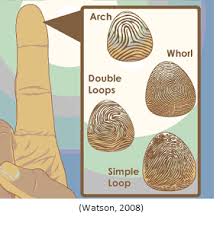
It may be true that different regions of the world have some notable characteristics such as dark skin in Africa, or narrower eyes in Asia. However, Diamond argues this does not mean that humans can be categorized into clear biological groups. Depending on what biological characteristic is used (skin, blood type, fingerprints, lactase digestion etc.) the groups come out differently. Based on sickle cell malaria gene catorizations, Swedish whites will be grouped with Xhosas in Africa. That is the problem of concordance. If the groupings vary according to the trait used, there is no concordance of variable traits, and therefore defining a subspecies of humans is not valid.
Today, DNA analysis is possible, and that will clarify how various populations migrated from Africa to other parts of the world. Obviously some groups are closer cousins, like Japanese are closer to Koreans and Tibetans. However, even within Japan, similar splitting is possible. Some people in Japan have more Mongolian genes, some have more Oceania genes. It is mixed and complex. That is the problem of hierarchy. Depending on how much difference in DNA you define as "different" (0.1%? 0.2%), the number of categories will change. The criteria is arbitrary and ultimately meaningless. Clear categories of human physical characteristics based on multiple traits cannot be defined. Categories with one or two traits are easy, of course, but which traits are used is arbitrary.
In race, traditionally, beauty traits were used because that is how humans like to subjectively and culturally separate themselves. As Diamond concludes, in primitive times, such 'us and them' distinctions may have been useful for protection. In the age of global interaction, such distinctions are unneeded and harmful.
Critical Reaction:
Does this argument make sense? It seems to. However, one thing that bothers me is that the definition of "concordance" (or any definition of subspecies) is hard to find on the Internet. Do other taxonomists agree with Diamond's view? I'm curious how solid the consensus of "no human races" is.
Also, assuming his argument is reasonable, what's the application? For one, scientists in any field should not use the word "races" in a biological sense. That seems clear. However, in society, people live from day to day based on their subjective, traditional notions. Whites think they are white, and Asians think they are Asian. The concept of race is subjective and cultural, but it IS something that people feel as a social category. Therefore, ignoring it or abandoning it is not a solution.
A proper understanding of both 1) the biological fallacy of race, and 2) the social reality of race is necessary.

Summary:
In his 1994 article in Discover Magazine, Jared Diamond argues that the traditional notion of "human races" (subspecies) based on visual features of skin, hair, eyes is not scientific. Furthermore, it is unnecessary and harmful to human society.
 |
| Race by Blood Type A? |
 |
| Race by Fingerprint Type |

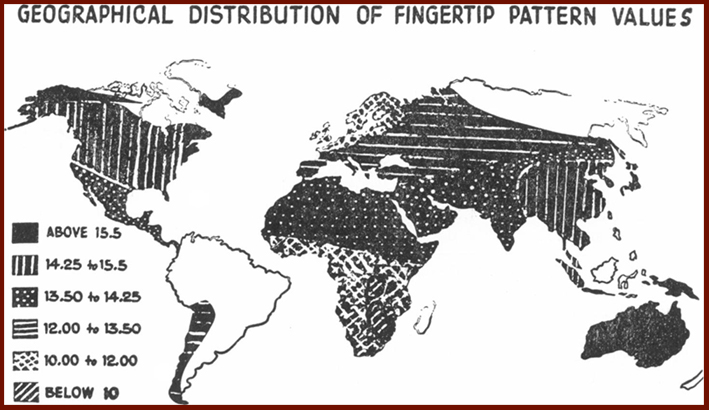
It may be true that different regions of the world have some notable characteristics such as dark skin in Africa, or narrower eyes in Asia. However, Diamond argues this does not mean that humans can be categorized into clear biological groups. Depending on what biological characteristic is used (skin, blood type, fingerprints, lactase digestion etc.) the groups come out differently. Based on sickle cell malaria gene catorizations, Swedish whites will be grouped with Xhosas in Africa. That is the problem of concordance. If the groupings vary according to the trait used, there is no concordance of variable traits, and therefore defining a subspecies of humans is not valid.
Today, DNA analysis is possible, and that will clarify how various populations migrated from Africa to other parts of the world. Obviously some groups are closer cousins, like Japanese are closer to Koreans and Tibetans. However, even within Japan, similar splitting is possible. Some people in Japan have more Mongolian genes, some have more Oceania genes. It is mixed and complex. That is the problem of hierarchy. Depending on how much difference in DNA you define as "different" (0.1%? 0.2%), the number of categories will change. The criteria is arbitrary and ultimately meaningless. Clear categories of human physical characteristics based on multiple traits cannot be defined. Categories with one or two traits are easy, of course, but which traits are used is arbitrary.
In race, traditionally, beauty traits were used because that is how humans like to subjectively and culturally separate themselves. As Diamond concludes, in primitive times, such 'us and them' distinctions may have been useful for protection. In the age of global interaction, such distinctions are unneeded and harmful.
Critical Reaction:
Does this argument make sense? It seems to. However, one thing that bothers me is that the definition of "concordance" (or any definition of subspecies) is hard to find on the Internet. Do other taxonomists agree with Diamond's view? I'm curious how solid the consensus of "no human races" is.
Also, assuming his argument is reasonable, what's the application? For one, scientists in any field should not use the word "races" in a biological sense. That seems clear. However, in society, people live from day to day based on their subjective, traditional notions. Whites think they are white, and Asians think they are Asian. The concept of race is subjective and cultural, but it IS something that people feel as a social category. Therefore, ignoring it or abandoning it is not a solution.
A proper understanding of both 1) the biological fallacy of race, and 2) the social reality of race is necessary.
2011年11月9日水曜日
My Reaction to Shreeve's "Terms of Estrangement"

James Shreeve, author of Terms of Estrangement, Discover magazine 1994
Main Points:
Shreeve's main issue is whether the term "race" should be used in science and other professions such as police work or medical research. He interviews many experts to see what their opinions on it are. Most of his experts are anthropologists, and most of them (especially Armelagos, Marks, Smouse, Sauer, Lewontin and Brace) feel that the word "race" is NOT a scientific category that can be defined for humans. This follows the 1996 declaration by the American Association of Physical Anthropology (see via Moodle link). In other words, the categories are impossible to make because various geographical populations such as African, Asian, or European have not been isolated; they are all connected to each other and there are innumerable mixes.
Thus, Shreeve's interview data seems to point to a consensus that race is a traditional socio-cultural perception of human categories based on sets of visual characteristics such as skin color, eyes, and shape of facial features. It is connected to geography and migration and genetic change, but there are no clear "bushel basket" categories. It is not scientifically definable. However, at the same time, it is undeniable that police find the word useful for finding identities of suspect with quick visual sets of traits, and medical researchers find that medicines can be developed for certain types of people within a country such as American Blacks, who have different genetic tendencies than American Whites. Those are just genetic tendencies or "sub-populations" or "sub-cultures", not "races".
My Reactions:
My main question is "So what? What should we do with Shreeve's information?" Most of us are not anthropologists, so how is this connected to us? I understand that the term "race" comes from a European tradition from Linnaeus and Blumenbach and is not based on real science. People are different, but there are no clear categories that can be made. The genetic differences are mixed and complex based on human migration from Africa to other parts of the world.
OK, if somebody asks me, "What is your race?", what will I say? Will I say "There are no races of humans, but my ancestors are mostly from Europe."
Next, what will my children Michael and Mei say? The question "What is your race?" does not make sense to them at all. I guess they could say "We are biracial, with genes from a European father and Japanese/Asian mother, but that muddles the issue. Their best answer is probably "The word race should not be used, but our father's ancestors come from Europe and our mother's come from Japan."
Something like that? In any case, I think it is very valuable for us to EXAMINE where "terms of estrangement" come from. The word race is responsible for a LOT of suffering around the world. If it has no scientific basis, we should abandon it, and look for other words that more accurately describe our differences. Perhaps ethnicity is a better word?
登録:
投稿 (Atom)