For those of you who are not familiar with the story Sonny's Blues, here is a link.
http://ja.scribd.com/doc/7086554/Sonnys-Blues-by-James-Baldwin
For more information on the author Baldwin, click here.
http://en.wikipedia.org/wiki/James_Baldwin
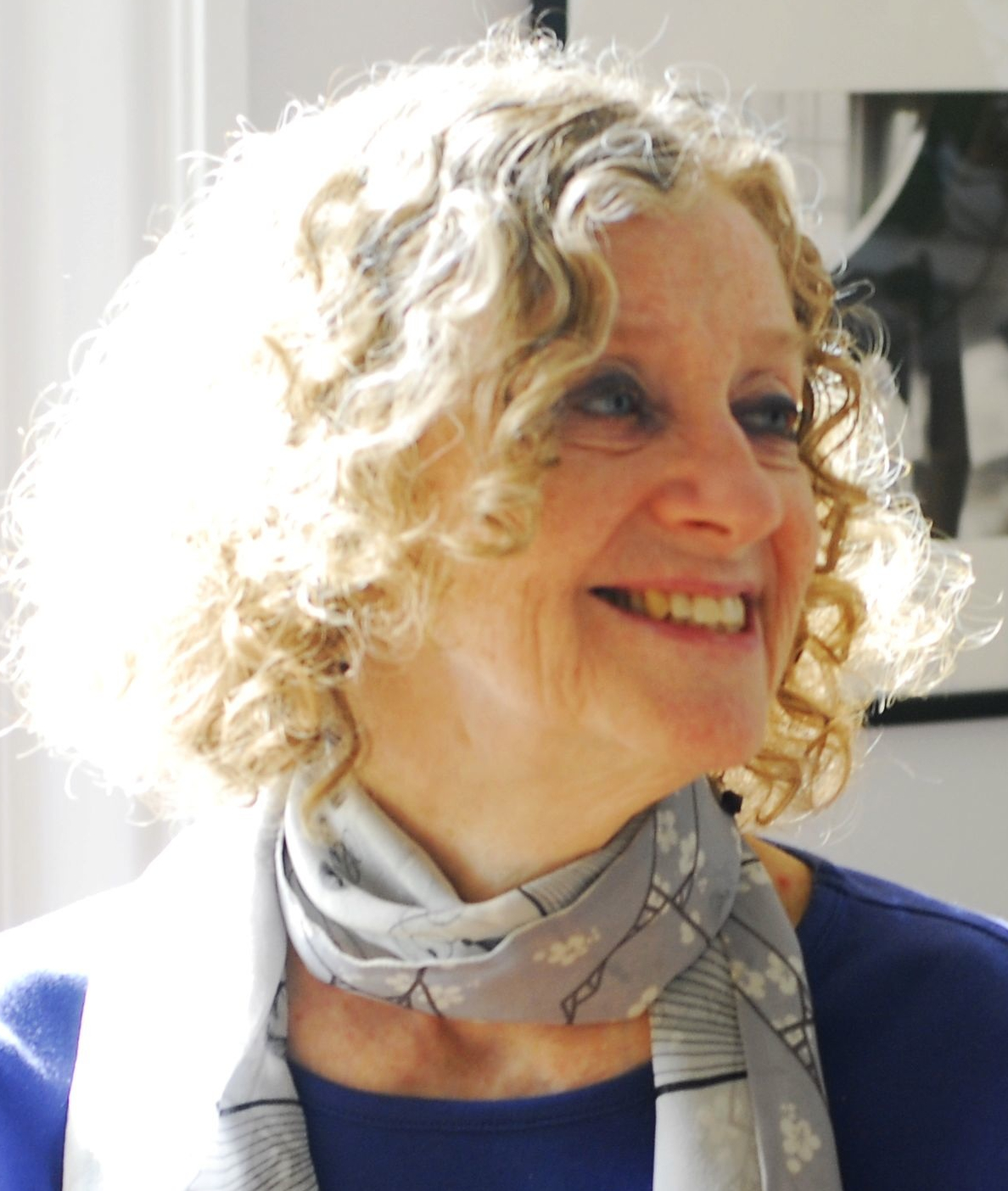
This story was used in a workshop I attended today at ICU on how to teach literature in liberal arts. The special workshop was given by writer and professor Kathleen Hill, who I've introduced previously on my blog.
Kathleen has repeatedly stressed that literature, both in reading it and writing it, forces us to honestly look at what it means to be human, and what makes us "us." That is the value of including literature in liberal arts study, even in a foreign language. I think my students can learn a lot from reading stories and asking themselves what they feel about it, just as they can when they write about personal topics and share their thoughts and emotions with each other.
It was my first time to read this story, or any story by Baldwin, and I felt the impact of the writing grow on me as we discussed it.
The short story is about two brothers, with the older brother narrating the story and expressing his love and concern for his younger brother who ran away from home, joined the navy, and after returning pursues his dream to be a jazz musician, with some difficulty with drug abuse along the way.
To me, the most powerful theme in the story is the importance of "listening with an open heart" to those you love. When we love someone, brother/sister, parents, husband/wife, son/daughter, or anyone, it is easy to forget to listen. We know what is best for the other person, and because we love them so much and want them to be safe, we either do not, or can not, really wait for them to open up and tell us what is happening in their hearts. I know that from my own experience as a son, father, brother, husband.
I had a very valuable inner conversation, reading Sonny's Blues.


2012年9月6日木曜日
Music Embedded "The Annointed" (Kathleen Hill, 1990)
A colleague shared this short story by Kathleen Hill with me and I HAD to add music to it as I read.
This thought came to me as I was reading and really enjoying the vivid narration and descriptive expressions through the thoughts and emotions of the 12 year old female student as the music she is introduced to by her teacher overlaps with various events in her life. The tones set by the classic music pieces introduced really add a different dimension to the story.
This story and more can be read on the author's website: http://www.kathleenhillwriter.com/
And, by the way, Ms. Hill will be on the ICU campus as a visiting scholar during Autumn term. You may have a chance to talk with her! Mark
----------------
This thought came to me as I was reading and really enjoying the vivid narration and descriptive expressions through the thoughts and emotions of the 12 year old female student as the music she is introduced to by her teacher overlaps with various events in her life. The tones set by the classic music pieces introduced really add a different dimension to the story.

This story and more can be read on the author's website: http://www.kathleenhillwriter.com/
And, by the way, Ms. Hill will be on the ICU campus as a visiting scholar during Autumn term. You may have a chance to talk with her! Mark
----------------
| Reprinted in Best American Short Stories 2000 The Pushcart Book of Short Stories Pushcart XXV |
BY KATHLEEN HILL My harp is turned to mourning. And my flute to the voice of those who weep. – Job 30:31 |
| IN MISS HUGHES’S SEVENTH-GRADE MUSIC CLASS, we were expected
to sit without moving finger or foot while she played for us what she
called “the music of the anointed.” At a moment known only to herself,
Miss Hughes opened the album of records ready at her elbow and, tipping
her head from side to side, cautiously turned the leaves as if they had
been the pages of a precious book. When she had found the 78 she was
looking for, she drew it from its jacket and placed it on the spinning
turntable. But before lowering the needle she took a moment to see that
we were sitting as she had instructed: backs straight, feet on the
floor, hands resting on our darkly initialed wooden desktops. While the record was playing, Miss Hughes’s face fell into a mask, her mouth drooping at the corners. A small woman in high heels, she stood at attention, hands clasped at her waist, shiny red nails bright against her knuckles. She wasn’t young, but we couldn’t see that she was in any way old. The dress she wore was close-fitting. Often it was adorned by a scarf, but not the haphazard affair some of our teachers attempted. Miss Hughes’s scarf was chosen with care, a splash of blue or vermilion to enliven a somber day, and was generous enough to allow for a large, elegant loop tied between her breasts. Most of us had turned twelve that year and were newly assembled at the high school. The spring before we had graduated from one or another of our town’s four elementary schools, where we had stooped to water fountains and drawn time charts on brown paper. Now we watched with furtive Interest while the juniors and seniors parked their can with a single deft twist of the steering wheel. This was the grown-up world we had been waiting for, fervently and secretly, but once here most of us knew we had still a long way to travel. Our limbs were ungainly, ridiculous. We twitched in our seats; our elbows and knees, scratched and scabbed, behaved like children’s. We knew we couldn’t lounge at our lockers with the proper air of unconcern, nor did we suppose we could sit upright and motionless for the duration of the “Hallelujah Chorus” from Handel’s Messiah or a Beethoven sonata. Yet under Miss Hughes’s surveillance, we learned to do so. If the grind of a chair’s legs or a sigh reached her ears, Miss Hughes carefully lifted the needle from the spinning record and, staring vaguely into space, showing no sign that she recognized the source of the disturbance, waited until the room was silent before beginning again. In other classes we doodled in our notebooks, drawing caricatures of our teachers, words streaming from their mouths in balloons. Small pink erasers flew through the air. On the Monday morning following a stormy bout with us on Friday, Mrs. Trevelyan, our math teacher, was tearful. “My weekend was ruined,” she told us. “It troubles me very much when we don’t get along together. Surely we can do better, can’t we? If we make a little effort?” We looked at her with stony eyes. To our social studies teacher, Miss Guthrie, we were deliberately cruel. Her voice was high, her mouth was tense, and often when she spoke a tiny thread of spittle hung between her lips. If someone answered a question in a strangled voice, mimicking her, she pretended not to notice. Miss Hughes neither cajoled nor ignored us. Instead she made us her confidants. Music class met on Friday afternoons and through the windows the dusty autumn sunlight fell to long strips across our backs and onto the wooden floor. Behind us, flecked with high points of light, trees lined one end of the playing field. It was hard to tell, turning to look after a record had wound to its end, if the sun were striking to gold a cluster of leaves still green and summery or if a nighttime chill had done it. The class always followed the same turn: first, Miss Hughes dictated to us what she called “background,” pausing long enough for us to take down what she said in the notebooks we kept specially for her class, or for her to write on the blackboard a word we might not know how to spell. To what class of stringed instruments does the piano-forte belong? we wrote. The pianoforte belongs to the dulcimer class of stringed instru-ments. Or: Name several forerunners of the pianoforte. Several forerunners of the pianoforte are the clavichord, the virginal, the harpsichord, the spinet. If giggles rose involuntarily in our throats at the word “virginal,” we managed to suppress them. Following dictation, which she delivered without comment or explanation, she would ask us to assume our “postures:” We had already written down the name of the piece we were about to hear, its composer, and usually some fact having to do with its performance—on the harpsichord, the third movement of Mozart’s Sonata in 4 Major, otherwise known as the “Turkish March,” played by Wanda Landowska. After she had set the needle on its course, we were for the moment alone with ourselves, a fact we were given to understand by the face wiped clean of all expression she held before us. We were then free to think of whatever we liked: a nightmare we had almost forgotten from the night before; a dog shaking water from its back, the drops flying everywhere like rain; a plan we had made with a friend for the weekend. Or we were free simply to watch the dust floating in the shafts of sunlight, to follow a path the sounds led us up and down. We marveled that Miss Hughes always knew exactly when to turn and lift the needle, that she knew without looking when the record was almost over. After she had replaced the arm in its clasp, she turned her full attention to us. “You have just heard, boys and girls, in the “Turkish March,” a great virtuoso performance. What do I mean by “virtuoso”? A virtuoso performance is one executed by an instrumentalist highly skilled in the practice of his art, one who is able to bring to our ears music that we would otherwise go to our graves without hearing. The first great virtuosi pianists were Liszt and the incomparable Chopin, both of whom you will meet in due course. “In fact, boys and girls,” she said, lowering her voice a little so that we had to lean forward to hear, “we have our own virtuosi pianists, ones who regularly perform close by in New York City, only a half hour’s ride away on the train. You have heard the name Artur Rubinstein, perhaps? You have heard the name Myra Hess? These are artists whose work you must do everything in your power to appreciate first hand. We go to sleep at night, we wake in the morning, we blink twice and our lives are over. But what do we know if we do not attend?” Miss Hughes suddenly held up her two hands in front of us, red fingernails flashing. “You will see, boys and girls, I have a fine breadth of palm. My fingers are not as long as they might be, but I am able to span more than an octave with ease. Perhaps you do not find that remarkable. But I assure you that for a woman a palm of this breadth is rare. I had once a great desire to become a concert pianist myself. A very great desire. And I. had been admitted to study at Juilliard with a teacher of renown. A teacher, Carl Freidburg, who in his youth in Frankfurt had been the student of Clara Schumann. Who had heard Liszt interpret his own compositions. When I went for my audition, when I entered the room where the piano was waiting and Mr. Freidburg was sitting nearby, I was maid. I do not hide that from you, boys and girls. I was very much afraid. But as soon as I began to play Chopin’s Polonaise in A-flat, a piece that requires much busy finger work by the left hand and a strong command of chords, I was so carried away by the fire of the music that I forgot the teacher. I forgot the audition. I forgot everything except the fact that I was now the servant of something larger than myself. When I reached the end and looked up and I was in a bit of a daze, I may tell you—the great teacher’s eyes were closed. He bowed his head once, very simply. That was all. I left the room. Soon afterward I received a letter assuring me that he would be proud to have me as his student.” Miss Hughes’s face had registered the sweep of feelings she was recounting to us. Her eyes had narrowed with her great desire to be a pianist; entering the audition room, her jaw had grown rigid with fear; and while the great teacher had sat listening to her play, her face had assumed the look we were familiar with, the mask. Now her dark eyes took on a dreamy expression we had not yet seen. She seemed to be looking for words in a place that absorbed all her attention, over our heads, out the window, beyond. “It was that winter, boys and girls, that my destiny revealed itself to me. If it were not too dramatic to put it this way, I would say that my fate was sealed. Everything I had hoped for, worked for, practicing seven hours each day after I had finished giving lessons—everything was snatched away in a single instant. I will tell you how it happened. Because someday in your own lives you may wake to a new world in which you feel a stranger. And you will know, if by chance you remember our conversation here today, that someone, no, my dear boys and girls, many others, a host of others, have also risen to a dark morning. “A friend, a friend whom I loved, had asked if I would accompany him on a skiing trip to Vermont. Of course I said yes. Why should I not? We were to spend a day on the slopes. I was a great skier—my father had taught me when I was a child—and I looked forward to this holiday with the greatest excitement. I had been working hard that winter, too hard. It may have been my fatigue that In the end brought about my ruin. Be-cause taking a curve that at any other time I might have managed with ease, my legs shot out from beneath me, and in an attempt to catch myself I let go of my pole and put out my hand, as any good skier knows not to do. Instead of fracturing a leg or a hip, both of which I might easily have spared, I injured my left hand, breaking three fingers that never properly healed.” This time Miss Hughes raised her left hand alone. She must have been about to point out to us the fatally injured fingers when the bell rang and she immediately dropped her arm. “To each of you a pleasant weekend, boys and girls,” she said, turning to replace her records in their sleeves. By class the following Friday we had other things to think about, and perhaps she did as well. We had just listened to Bach’s Fugue in G Minor, for the purpose of learning to recognize the sound of the oboe—and the room for once had an air not of enforced constraint but of calm—when Miss Hughes lifted her head and, looking out the window, told us that there was one of us, sitting now in our midst, who listened to music in a manner quite unlike the rest. “He listens as if for his life, boys and girls, and it is in this manner that the music of the anointed was written. For the composer, the sounds struggling in his imagination are a matter of life and death. They are as neces-sary to him as the air he breathes.” She kept us in no more suspense, but allowed her gaze to rest on a boy who always sat, no matter the classroom, at the end of a row. We had scarcely noticed him at all, those of us who had not gone to elementary school with him. But there he sat-at this moment, blushing. His hair was sandy, his face was freckled, and he wore glasses with clear, faintly pinkish rims. His name was Norman de Carteret, a name that in a room full of Daves and Mikes and Steves we found impossible to pronouncewithout lifting our eyebrows. During the first week of September, Miss Hughes had asked him how he would like us to say his last name, and he had answered quietly, so quietly we could scarcely hear him, that it was Carteret, pronouncingthe last syllable as if it were the first letter of the alphabet. The “de” he swallowed entirely. “Then,” Miss Hughes had said, “your father or his father must have come from France, the country that gave us Rameau, that invaluable spirit who for the first time set down the rules of harmony. The country to which we are indebted as well for Debussy, who accomplished what might have been thought impossible: he permitted us to hear the sound of moonlight.” I knew something about Norman the others didn’t. My mother had lived in our town as a child and occasionally met on the street someone she would later explain was once a friend of her mother’s, dead long ago. Hilda Kelleher was one of these friends, even a cousin of sorts, and lived in a large, brown-shingled Victorian house, not far from the station. A wide porch, in summer strewn with wicker rocking chairs, ran along the front and disappeared around one side. The other end of the house was flanked by tall pines that in winter received the snow. Hilda was of an uncertain age—older than my mother, but maybe not a full generation older. Her hair was dyed bright yellow, and when she smiled her mouth twitched up at one corner uncovering teeth on which lipstick had left traces. Hilda had never married, but there was nothing strange in that. The town was full of old houses in which single women who had grown up in them lived on with their aging mothers, going “to business,” teaching in the schools, supplementing their incomes in whatever ways they could. I supposed that they, too, had been girls, just as I was then, walking on summer nights beneath street lights that threw leafy shadows on the sidewalks, that they, too, had listened to the murmur of voices drifting from screened porches, had heard the clatter of passing trains and dreamed of what would happen to them next. But life had passed them by, that was clear. Hilda had dealt with the problem of dwindling resources by taking in boarders. An aunt of my mother’s, a retired art teacher who, as my mother liked to say, “had no one in the world,” was looking for a place to live. One afternoon in late summer, just before school opened, my mother visited Hilda to inquire about arrangements, and I went with her. While they sat talking in rocking chairs on the front porch I discovered around to the side a swing hanging from four chains. It was easy to imagine sitting there on summer nights behind a screen of vines, morning glories closed to the full moon, listening to the cicadas. Swinging back and forth I could hear their voices, my mother’s telling Hilda how Aunt Ruth had lived in Mrs. Hollingsworth’s house in Tarrytown, how this arrangement would seem familiar to her. I heard Hilda saying how glad she was that a room was available, that we would look at it in a moment. She went on to say that one boarder, who had been with her a year, had moved out of the room into a smaller one that better suited his means. Did my mother know a Mr. de Carteret? He had a son who was going to the high school, she thought, in the fall. The son lived with the mother but came to visit the father on Saturdays. The terrible thing was that when he came the father wouldn’t open the door of his room to him. Her voice sank so low that I got out of the swing and stood along the wall to listen. “The poor child,” she said in a loud whisper. “He knocks, and when his father won’t let him in he sits outside the door in the hall. Saturday after Saturday he comes to the house and waits outside his father’s room and still his father won’t see him. Sometimes—oh, the poor child, I wish I knew what to do—he is there all afternoon. I was back in the swing by the time they called me to look at the vacated room. We followed Hilda up a staircase of wide oak steps and along a hall, passing mahogany doors on either side. At last she threw one open on a room that had a neat bed covered with a white spread, a desk, and a chest of drawers. Pines stood in the window. My mother said she couldn’t imagine that her aunt wouldn’t be happy here; the room seemed to breathe tranquility. We closed the door, then went down the hallway to the staircase and out of the house. I had been wondering whether or not I should whisper to my closest friends what I had heard Hilda say about Norman, but after Miss Hughes had asked us to notice his perfect attention, it seemed to me I should not. Why not, I couldn’t be sure, except it seemed that if he were listening “as if for his life,” he had heard something in the music that I hadn’t, and I didn’t think the others had either. I felt out of my depth. And soon enough, by saying nothing, by keeping to myself what I took to be his secret, I came to feel that some understanding had sprung up between us, that we shared a knowledge hidden from the others. Then, very soon, our paths crossed. In our old school there had been a classroom filled with books which we called the library. Twice a week we sat in a circle around Miss Ken–dall, the librarian, while she read to us, turning the book around from time to time to show us the pictures. I knew the books I wanted to read in that library; they were not the history books urged on us by our teachers, or the books about boys running away to sea, or even the large and lavishly illustrated volumes of myths and fairy tales. It was stories about girls I wanted, mostly orphan girls, or at least girls, like Sarah Crewe, whose mothers were dead and who had been left to the care of cruel adults to whom they refused to be grateful, to whom, in moments of passion, they poured out their long-suppressed feelings of outrage. I had tried to explain all this to the older girl in the high school library who was supposed to show us around, and she had said I might like to read Jane Eyre, pointing to shelves lodged in a corner. I should look under the B’s, she said, but I ended up nearby, facing shelves where all the books were written by people whose names began with a C. I was stopped by a title: Lucy Gayheart, a book about a girl, and perhaps even the kind I had in mind. It was written by Willa Cather, a name I had never heard, and I quickly looked around for a place to read. This library was much larger than our old one, and instead of a little table where books were set on their ends for display—picture books and books for older children with such titles as The Story of Electricity and Abigail Adams: A Girl of Colonial Days—here there were unadorned long tables stretching the width of the room, with chairs tucked in on, either side. High windows filled one end, and beneath them the librarian sat at her desk, inkpad and rubber date stamps poised at her elbow. I had sat down and opened the dark blue cover of my book to the first page when I looked up and saw Norman de Carteret sitting across the table, poring over an immense open volume. One foot was drawn up to rest on the seat of his chair, and as he read he leaned his face against his knee. It was a book about ships, I could see that; there was a full–scale picture of a sloop, or a schooner, with all its sails unfurled. There was writing on the different parts of the ship and on the sails, too, probably to let you know what they were called. Norman was absorbed, and I began to read: In Haverford on the Platte the townspeople still talk of Lucy Gayheart. They do not talk of her a great deal, to be sure; life goes on and we live in the present. But when they do mention her name it is with a gentle glow in the face or the voice, a confidential glance that says: “Yes, you, too, remember?” They still see her as a slight figure always in motion; dancing or skating, or walking swiftly with intense direction, like a bird flying home. Lucy was one of the vivid creatures I wanted to read about, that was clear, but there was something that seemed not quite right, some note I had not yet heard. The story was already over and she lived on the first page not as a living person but as a memory. I read on and to my surprise saw that Lucy, like Miss Hughes, wanted to be a pianist. She had been giving lessons to beginners from the time she was in tenth grade and had left Haverford to study music with a teacher in Chicago. Now she had come home for the Christmas holidays and had gone skating with her friends on the Platte. A young man, Harry, had joined them, and at sunset Lucy and he had sat together on a bleached cottonwood log, where the black willow thicket behind them made a screen. The interlacing twigs threw off red light like incandescent wires, and the snow underneath was rose-color.... The round red sun was falling like a heavy weight; it touched the horizon line and sent quivering fans of red and gold over the wide country ...In an instant the light was gone.... Wherever one looked there was nothing but flat country and low hills, all violet and grey. These words, too, seemed remarkable, because I thought I recognized the place. In our town, if you followed the railroad tracks over the bridge that looked down on Main Street, on past the red-brick factory and Catholic church, you came to a reservoir that in spring was overhung with Japanese cherry trees, their branches weeping pink blossoms into the black water. During the winter months, when the reservoir had frozen over, we skated there. No prairie surrounded the water, only rocks and frozen grass and crouching woods; but the sky loomed wide overhead, and on winter afternoons the red sun was caught for a moment in the drooping silver branches of the cherry trees. I thought I knew how the Platte would look, the sun going down on it, thought I knew how afterward everything would turn ordinary and flat. Norman was still contemplating the picture of the sailing ship. I could glimpse him sitting there as I lowered my head to continue reading. Now Lucy and Harry were settled in a sleigh that was, I read, a tiny moving spot on that still white country settling into shadow and silence. Suddenly Lucy started and struggled under the tight blankets. In the darkening sky she had seen the first star come out; it brought her heart into her throat. That point of silver light spoke to her like a signal, released another kind of life and feeling that did not belong here. I closed the book, deciding for today to forget Jane Eyre I knew I had never read a book like this one. I had been expecting someone else to come along, or for Lucy and Harry to say something surprising or romantic to each other, something to happen be-sides the round red sun falling on the prairie and the star speaking to Lucy like a signal. And yet l felt that in this book these were enough. The pages I had read threw open the strange possibility that looking at things, feeling them, were also things that happened to you, just as much as meeting someone or going on a trip. What you thought and felt when you were alone or silently in the presence of someone else also made a story. I looked up to see that Norman seemed to have fallen asleep on his book. His glasses were standing on their lenses beside him on the table and his face was in his arms. When the bell shrilled through the room, his shoulders twitched and he raised his head from the picture of the boat with all its sails. Looking up, still half asleep, his shortsighted blue eyes came to rest on mine. Another time I might have looked away. But as I, too, was half asleep, entertaining visions of quivering fans of red and gold playing on the prairie, turning over my new thoughts, I realized only after a moment that Norman had smiled at me as if he were still dreaming, as if he had been alone and, suddenly seized by a happy idea, were smiling at himself in a mirror. One Friday afternoon in October we filed into Miss Hughes’s classroom to find her standing beside the day’s album of records, dressed entirely in white. Her dress, made of soft white wool, fell just below her knees. There was no crimson or purple scarf tied round her neck; instead, a long necklace of pearls hung between her breasts. “You will be wondering, boys and girls,” she said to us as soon as we were seated, “why you find me today dressed as you see. I am in mourning, but a mourning turned to joy. White is the color of sorrow, as it is of radiance. And today I am going to play for you a piece of music that throughout your lives you will return to again and again. If ever you must make a decision, if ever you find yourselves tossing on a stormy sea—and life will not spare you, boys and girls; it spares no one—I beg you to do as I say. Find a spot where no living soul will disturb you, not even your dearest friend, and in the silent reaches of your soul listen to the music you are about to hear. Today we shall have no dictation, be–cause it is my idea that Mozart’s Requiem is best introduced without preliminaries. A requiem, you must know, is a prayer for the dead. To–day we shall hear the opening section of this great work. One day—we shall see when—I shall play for you another.” Miss Hughes lowered the needle to the record that was already in place and spinning on the turntable. For a few moments a mournful sound filled the room, something that seemed to move forward, as if people were walking—a rhythmic, purposeful sound, with an echo for every step when suddenly, without any warning, a blare of trumpets and kettle drums broke it all up, a frightening, violent blast that made us jump in our seats. Then, into the clamor, a chorus of men’s voices forced their way, low, solemn, moving forward as before, but confident, as if they were sure of what they were saying. We were just getting used to the chorus when high above all the rest floated a single woman’s voice, a voice raised high above the world but sliding down to meet it, and so calm, so full of understanding, I could have cried. Miss Hughes lifted the needle and allowed her face to keep the expression of the mask for a few moments longer than usual. Then she drew a deep breath. “To comment on this music, boys and girls, would be an impertinence. We must let it rest in us where it will. Rest: a word, as it is used in music, to mean the absence of sound, a silence, sometimes short and sometimes long, when we hear only the vibrations of what has come before and prepare for those that will follow. You will understand what I mean if you think of a wave, the kind you see in a Japanese painting, caught in that moment just before it breaks.” The record had remained spinning on the turntable, its black surface crossed by a silver streak of light. Now Miss Hughes bent down, turned the knob, and the record slowly wound to a halt. Then she again stood upright, facing us. “The word ‘requiem’—a Latin word you of course already know—might best be translated by several words in English: may he find rest at last, the one who has died. But my own prayer, I shall tell you now, is that we, the living, may find rest within the span of our own lives. I mean that rest we know only when we are most awake to sorrow and to joy, when we find we can no longer tell the difference. Then we are living outside Of time, as we are when we are listening to music such as that we have just heard. In such an instance, death is only something that happens to us, like being born or growing old, but is of less consequence “than the many deaths we sustain in life. I mean the deaths, my friends, when our dearest hopes are blasted.” Miss Hughes had been speaking slowly, meditatively, choosing her words with care. Her eyes had gone from one of us to the other. Now she assumed the dreamy look we had seen once before. She looked beyond us, through the clear panes of the window, into the distance. “Because, boys and girls, death may come to us in many disguises. You see, I, too, have gone down into the waters.” “I think I have told you already that my great desire in life was to have become a pianist, to play for myself one of the late piano concerti of Chopin, let us say, or of Schubert’s Impromptus. To that end I was living in Paris, studying with a teacher who was drawing from me all those feelings that I had supposed—young as I was—must remain outside music, separate from it. I had embraced discipline, and practicing for hours and hours everyday was the only way I knew to approach a sonata or prelude. It was this teacher who showed me that music is composed by a: spirit alive to suffering and to joy and must be played by another such spirit. That it was only by bringing every moment of my life to the music that I could hope to draw from it what the composer had put in.” For a moment Miss Hughes seemed to wake from a sleep and looked at us alertly. “As indeed, boys and girls, in this room we must bring every moment of our lives to the music as we listen.” I wondered, while she stared from face to face, if her damaged hand had healed by the time she arrived in Paris, or if all this had taken place sometime before the skiing accident. But I would no more have thought to ask her than to ask whether or not Lucy Gayheart had taken the train back to Chicago the night after she sat on the log and saw the red light fade from the prairie. The facts, the before and after of events, had their own logic by which, trusting the source, I supposed they must take their place in some pattern hidden from me. Miss Hughes was playing with her pearls, winding them around her ringers. Again her gaze had retired to a place beyond the window. “The city of light, boys and girls; that’s what you will hear Paris called. But it is also, I will tell you, the city of darkness. If you cross the Pont des Arts one day, you will see the Île de la Cité, that great barge of an island, drifting up the river, the River Seine, I’m sure you know. And on that island, as you make your way across the bridge, you will see swing slowly into view a spectacle that has greeted the eyes of bewildered humanity for almost eight hundred years, the great square towers of Notre Dame. I say ‘slowly,’ you will notice, because like the opening of the requiem we have just heard, like Bach’s Fugue that stirred our souls a few weeks ago, that’s how many of the best things come to us. The catastrophes stop us in our tracks. I know, my friends, because I came to a halt on the bridge that day; I was unable to continue my walk. I had a letter with me that I had only just received and that had thrown me into a state of the most painful confusion.” In the silence that followed these words we could hear the excited cawing of crows on the playing field behind us. “The letter was from a close friend at home relating the pitiable state into which my father had fallen. A debilitating illness from which he could not recover. The friend, who was old himself, did not ask me to return. But how could I think of anything else? Who would care for my father if I did not? I was all he had in the world, and it was to him that I owed my early life in music, he who had given me my first lessons on the piano. Of course I must return to look after him. “And yet—and here, my dear boys and girls, I do not seek an answer—how would that be possible? To leave Paris, to leave the city in which I had been so happy! To leave all those feelings I had begun to put into my music! In short, to leave my teacher! It was not to be thought of. I leaned out over the edge of the bridge and looked down into the river flowing beneath. I could not see my way. I tasted the bitter waters of defeat. Oh, I was tempted! Finally, scarcely knowing how I got there, I found myself in my room, and after closing the door and pulling the shutters, I listened to Mozart’s Requiem. By the time it had concluded I knew my way.” Miss Hughes, standing immobile in white, continued to gaze out the window. Surely the class would be over in a minute or two, but she didn’t seem to recollect our presence. I stealthily turned my head to see sleek black crows lifting out of the trees and lighting back into them, their outspread wings glinting in the afternoon light, the branches with all their yellow leaves tossing up and down. In the days that followed, I decided that Miss Hughes had been in love with her teacher. She must have been, I thought, because I had now followed Lucy Gayheart to Chicago where she lived alone in a room at the top of a stairs. A room, perhaps, like the room in Paris to which Miss Hughes had stumbled and bad drawn shutters on a bright day. Lucy Gayheart was not in love with her teacher, but her teacher had urged her to attend a concert given by a celebrated singer named Clement Sebastian who, although he lived in France, was spending the winter in Chicago. “Yes, a great artist should look like that,” she had thought the moment he had walked onto the stage. And then he had sung a Schubert song. The song was sung as a religious observance in the classical spirit, a rite more than a prayer: “In your light I stand without fear, O August stars! I salute your eternity….” Lucy had never heard anything sung with such elevation of style. In its calmness and serenity there was a kind of large enlightenment, like daybreak. I remembered that Lucy had struggled up in Harry’s sleigh when she had seen the first star flashing to her on the wide prairie, and I thought perhaps this was what Miss Hughes had meant about listening for your life: what you heard in the music was something exalted that you already knew, but weren’t aware that you did, something you had blindly felt or heard or seen. But then, reading on, I learned that Lucy’s mood had quickly changed. There was to be no more serenity and calm. She listened to Sebastian sing five more Schubert songs, all of them melancholy, and felt that there was something profoundly tragic about this man.... She was struggling with something she had never felt before. A new conception of art? It came closer than that. A new kind of personality? But it was much more. It was a discovery about life, a revelation of love as a tragic force, not a melting mood, of passion that drowns like black water. Although I didn’t understand exactly how the music had led to this discovery, I knew that in this book, called by her name, I was not reading about Lucy alone. The lines that came next made it clear she was merely one member of a select company, a company set apart—as Miss Hughes had set Norman apart—by a destiny determined from within: “Some peoples’ lives are affected by what happens to their person or their property; but for others fate is what happens to their feelings and their thoughts—that and nothing more.” By the time Hilda’s house came into view I was riding my bike in loops, swerving sharply toward one curb then the other, doubling back. In the middle of the street I made a circle, three times. I knew now it was not so much Aunt Ruth I was afraid of running into; it was Norman de Carteret. Suppose he was sitting in the dark hall outside his father’s door? Or suppose I met him coming out of the house as I was going in? And then, my bike making wider and wider loops both toward and away, going over in my mind what I would say to Norman if we happened to meet, I finally dared to look up and saw him there on the porch at the side of the house, sitting on the swing that hung from the four chains. The morning-glory vines were bare, and he was sitting with his feet against the porch railing, pushing himself back and forth. I could see, too, that when he saw me he flinched and lowered his head to hide his face. But then, as I was about to ride by, pretending I hadn’t seen him, he looked up and—as he had done in the library—smiled. I parked my bike at the bottom of the steps, removed the cake from the basket, and went around the corner of the porch to where he was sitting. “Hi,” he said. His brown high-top sneakers were resting on the porch railing. Behind his glasses his blue eyes floated a little. “Hi,” I said. There was a long pause before I thought of something to say. “My aunt lives here.” “I know.” His voice was high and childish. “So does my father.” I sat down on the railing not far from his feet, swung my legs up and leaned back against one of the round white pillars. It seemed surprising that Norman spoke of his father. Had he knocked on his door this morning and, like all the other times, been greeted with silence? Had he been waiting in the hall for hours, not knowing what to do, and finally come down to sit on the swing? “Did you come here to see him?” I asked, both fearful and eager that he say more. “Yes,” he answered, looking straight ahead, out between the vines that in August had made a screen from the sun. Now a few shriveled leaves hung in the warm afternoon. Just as at school, Norman was wearing corduroy trousers a little too big for him, and a plaid flannel shirt buttoned at the neck. The sleeves came down almost to his knuckles. “I’m waiting till he wakes up. He told me not to go away. He wants me to wait for him here.” “Oh,” I said and came to a stop. His voice had something in it I thought I re-cognized. It was in Miss Hughes’s voice when she stared out the window while the crows were squawking and flapping in the trees. But Miss Hughes, as she stood there with her hands clasped at her waist, seemed to be communing with something only she could see. Norman’s face, on the other hand, had lost its dreamy quality: his freckles stood out while he spoke; his eyes looked sharp and aware. He was looking at me as if he had made a point that he expected me to respond to. Suddenly overcome with anxiety, not knowing what to answer, wanting only to erase the look in his eyes that made me afraid, I started unwrapping the cake. “Want some?” I asked. “Sure,” he said, and when I broke off a large chunk and held it out to him, he leaned forward in the swing and took it in a hand I could see was trembling. I broke off another chunk for myself. At first we ate demurely, silently, spilling a few crumbs around us and brushing them away. I would find a way later on, I thought, to explain to my mother about the cake. Then I swallowed a piece that was too big for me and choked and sputtered, and then, on purpose this time, crammed a fistful in my mouth, pretending to frown at him disapprovingly, as if he were the one stuffing his mouth, until suddenly I was aping convulsions, bent double, holding my side, almost falling off the railing. Norman at first looked on, snorting with laughter. Then he, too, snatched a handful of cake and shoved it in his mouth, and soon we were both grabbing for more, exploding in high giggles, looking at each other cross-eyed, holding our sides, pre-tending to be on the point of collapse, pretending to be falling and dying, until the cake had disappeared, lying around us in half-eaten pieces. Gradually we subsided, our shoulders stopped shaking, and we could breathe with-out gasping for air. The afternoon grew quiet around us. We could hear children playing up the block and the sound of someone raking leaves. Inside the house someone began to play the piano, some song from a time before we were born, something the grown-ups had sung when they were young. On the other side of the hedge, the late sun struck a large window into a flaming pool of orange. We avoided each other’s eyes as if we had shared a secret we were ashamed of. After a while whoever was playing the piano broke off abruptly in the middle of a song and closed the cover with a bang. The sun slipped from the window, the branches of the trees reached ragged above our heads. When I finally got to my feet, taking leave of Norman without saying a word, it was almost dark. For a few days afterward I tried falling in love with Norman de Carteret. I passed him in the halls sometimes, and once caught sight or him at his locker, turning his combination lock. But since our afternoon on Hilda’s porch, we were shy with each other, lowering our eyes when we met. Once, in music class, when Miss Hughes was playing a Brahms quintet for clarinet and strings, I tried to imagine how he might be listening, perhaps in the way Lucy had listened to Sebastian sing the Schubert songs. He was seated behind me, at the end of the row, and when I turned my head very slight-ly I could see him sitting there, his eyes sharp and aware, as they had been when he talked about his father. But at the end of the class when he walked through the door, his corduroy pants hanging from his hips, I could see he was only a child like myself. During the following weeks I pursued the story of Lucy Gayheart in fits and starts. I read with a sense of exaltation and impending doom, dipping back from time to time, for reassurance, into the world of Sara Crewe and Anne of Green Gables. There was some new strain in the voice telling the story, something I had not encountered in any other book It ran along beneath the words like a stream beneath a smooth surface of ice, some undertone murmuring, “This is the way life is, this is the way life is.” It was a voice—dispassionate, stern—I listened for with joy, as if it brought news from a coun-try for which I had long been homesick. And yet my nightly dreams told me, too, it was a country where terror and brutality might strike out of a benign blue sky. It seemed not so much that my child life was fading into the past. It was more that my entire future life was rising before me, as if it were already known to me, as if it had already hap-pened long ago and was waiting to be remembered. Despite my fitful reading, Lucy’s story was quickly running its course. She had already become Clement Sebastian’s piano accompanist, already fallen in love with him. He was Europe, the wide world, the life of feelings, unabashed and unashamed, not cramped or peevish as in Haverford. He was a singer, an artist. And although he was married, he had fallen in love with Lucy, with her youth, her enthusiasm, perhaps with her rapturous admiration of himself, he who was disillusioned and tired of the world. And so when Harry came to see her in Chicago, to take her to a week of operas and to propose marriage, she told him desperately that she couldn’t marry him, that she was in love with someone else. None of this seemed surprising. The undertone I listened for, I knew, had something to do with desire, with wanting someone who wasn’t there. Or maybe someone who was there but whom you couldn’t reach out and touch. It had to do with feelings that couldn’t be spoken and yet had to be spoken, the space between. But now Lucy’s story was taking an unexpected turn, was moving in directions my daytime self would not have thought possible. In response to what Lucy told him, Harry, in a fit of pique, married a woman lacking in that quick responsiveness he had loved in Lucy, and regretted the marriage immediately. Sebastian left Chicago for a summer concert tour in Europe and met a sudden death. In despair, Lucy returned to Haverford, to a “long blue-and-gold autumn in the Platte valley.” Then January came and “the town and all the country round were the color of cement.” Lucy left the house one afternoon to skate on the river, just as we would soon be skating on our reservoir with its weeping trees. What she didn’t know was that the bed had shifted, that what once had been only a narrow arm of the river had become the swift-flowing river itself. She skated straight out onto the ice, large cracks spreading all around her. For a moment she was waist deep in icy water, her arms resting on a block of ice. Then “the ice cake slipped from under her arms and let her down.” I was incredulous. Despite the opening sentences of the book, I thought I hadn’t understood and read the passage over and over, looking for some hint, some odd word or phrase, that would change its meaning. And yet, even while searching, even while trying to reassure myself that I must have missed something, I was aware—by some inner quaking that echoed the sound of splintering ice—I had understood very well. Harry is left to take up a life wracked with remorse that only time will soften, and Lucy slips into the regions of the remembered. It was as the undertone running beneath the story had assured all along: Lucy’s response to Sebastian’s songs, her bleak sense of foreboding, would be fulfilled. An early death—anticipated by the intense life of feelings—had been her destiny, and at the appointed time her death had risen to meet her. This, I supposed, was what people called tragedy. – SIX – Because of Haverford whose sidewalks Lucy had walked in the long autumn of her return, the houses and streets of our town looked different, the late gardens of chrysanthemums and Michaelmas daisies, the silver moon rising above them. In the November afternoons we ran up and down the hockey field in back of the school, and even at four o’clock the red bayberries flickered in the twilight. Walking home, thinking of Lucy, I noticed the cracks in the sidewalks, the way the roots of trees had splintered them. Beneath the sidewalks ran a river of fast-flowing roots that could throw slabs of cement into the air, make a graveyard of the smooth planes where we used to roller-skate and sit playing jacks. From the end of one street I could see the train station, its roof black against the orange sky, and could imagine the tracks running over the bridge and past the reservoir into the city. Even now Myra Hess might be practicing the Chopin she would play tonight to a crowd at Carnegie Hall. Perhaps Miss Hughes was sitting on the train that would take her to the concert; perhaps she would return late at night to a room in a big house like Hilda’s, a room that looked on pines. For Thanksgiving my mother invited Hilda and Aunt Ruth, who must not be left alone. Hilda’s lipstick, a wan hope, had left traces on her teeth, I took note as she leaned across the table to ask if I had met Norman de Carteret in any of my classes. Before answering I vowed I would not, cost what it might, be trapped as she had been, would not become an old woman in a town where life was one long wait. Hilda went on to recount to the table at large that Mr. de Carteret, who had scarcely stirred from his room for months, had been busy during the last days buying a turkey to cook for his son. He had bought cranberry sauce and sweet potatoes, she told us, and a bag of walnuts. It was all assembled on the table in the kitchen, and she herself had contributed two bottles of ginger ale. She had helped him put the turkey in the oven several hours before and at this moment it must almost be done. She hoped he wouldn’t leave it in so long that it dried out. She hoped, too, that he remembered to turn off the oven once he took it out, because something might catch fire. She wondered if she should telephone him now to warn him but was persuaded by my father that a fire was unlikely. On Monday we were back in school. I didn’t see Norman that day, or the next, or the next, not until Friday, when, passing in the hall, I caught sight of him standing at his locker. He was standing idly there, staring into it in his usual absent–minded way, not looking for anything in particular, it seemed. That was in the morning. By lunch a rumor had run through the school like fire through grass. One friend whispered it, and then another. Had I heard? Norman de Carteret’s father had killed himself. Yes, it was true. He had drowned himself in the reservoir on Saturday. He’d done it by putting stones in his pockets. Someone’s father had been there, had been part of the group that had pulled him from the water on Saturday night. That’s why Norman hadn’t been in school. All the teachers had been sent a notice, but Norman was in school today. Had I seen him? I had. What did he look like? Was he crying? I absorbed the news as if it were of someone I knew nothing about, someone I had to strain to place or remember, someone whose name I barely recognized. Norman had again become a stranger, someone wrapped in an appalling story. My exchanges with him had separated me from the group; for a while I had shared his isolation and in drawing near him had drawn closer to my dreaming self, my reading self. Now I wanted nothing more to do with him. I was terrified that recalling our shared silences might draw me into some vortex of catastrophe. My fear was akin to what I had felt when, reaching the end of Lucy’s story, I had looked frantically for something to tell me that I had not understood, that the words printed so boldly in black on the white page spelled out a meaning I had not grasped. All day there had been the promise of snow in the air, and when we filed into Miss Hughes’s room, a few stray flakes had begun to fall. They were there in the window, the first of the season. Norman was already sitting in his place at the end of a row and the snow was falling behind him. He was sitting bolt upright in his seat, staring straight ahead, the corners of his mouth twisted up into something like a grin. But we only glanced at him, we didn’t stare, sitting down as quickly as we could in our own places to get him out of our sight. We were overwhelmed with curiosity but also repelled. It would have been better if he hadn’t been there at all, if we could have gone over the story, embellishing it with each retelling, without having to look at him, without having to sit with him in the same room. Miss Hughes was, as usual, standing in her place beside the phonograph, the album on the table beside her. She was wearing a dark gray dress with a scarf that shimmered blue one moment, green the next. We had not met for two weeks because of the Thanksgiving vacation, but she had told us the last time we had seen her that she would welcome us back by introducing us to that consummate artist, Chopin. Now, rather brusquely, without the preliminary remarks with which she usually asked us “to silently invite our souls in order to prepare for the journey ahead,” she asked us to open our notebooks and she began to dictate. “For Chopin,” she pronounced, “the keyboard was a lyric instrument. He told his students, ‘Everything must be made to sing.’” For a few moments there were the sounds of papers rustling and of pencil cases coming unzipped. Then we settled to writing down her words. “Chopin was a romantic in his impulse to render passing moods, but he was a classicist in his search for purity of form. His work is not given to digression. The Preludes are visionary sketches, none of them longer than a page or two. ‘In each piece,’ Schumann said, ‘we find in his own hand, “Frederic Chopin wrote it!” He is the boldest, the proudest poet of his time.’” We wrote laboriously, stopping as Miss Hughes carefully wrote on the board the words “classicist,” “digression,” “visionary.” She made sure we had written quotation marks around Schumann’s words, the exclamation point where it belonged. Out of the comer of my eye I saw that Norman was hunched over his notebook, writing. Miss Hughes had turned to the album. “Now, boys and girls, we shall listen to one of Chopin’s Preludes, the fourth, in E minor. It is very brief.” She drew a record out of its sleeve and placed it on the spinning turntable. After three months’ training, we knew to assume our postures, so she had only to glance quickly around the room before lowering the needle. We heard the chords, the chords going deeper and deeper, and I pictured pine trees pointing to the sky at sunset; a darkness was about to overwhelm them, but for the moment they were lit by the setting sun. Everything was dis-appearing, the chords were telling us; a deep shadow was falling over the side of the mountain, yet the melody was singing of the last golden light thrown up from behind the rim. “Do you hear it, boys and girls?” Miss Hughes asked us as she lifted the needle from the record. “Do you hear there the voice of desire? Not for one thing or another, not for a person or a place, but desire detached from any object. What we have heard in this fourth Prelude is the voice of longing when it breaks through into the regions of poetry, into the regions of whatever lives closest to us and furthest away.” Miss Hughes’s scarf flashed blue then green against her gray dress, against the dark square of the blackboard behind her. Her eyes assumed the dreamy look we had seen before. “It was for this I had hopes of becoming a pianist,” she told us, looking out the window. “To coax that voice from the instrument, to allow others to hear it in the way that I did.” She was gazing into the snow flakes, it seemed, into the bare, black tree branches through which they were falling in the waning afternoon. She was watching them spill from the gray sky; in a trance she was following their white tumble. But all at once, as if she, too, were falling from some high place, as if she, too, were whirling through deep silent spaces, she seemed to catch herself. I had turned in my seat to look at the snow but also to catch a glimpse of Norman. He was sitting now with his face buried in his arms, as he had sat that day in the library. Miss Hughes looked around her sleepily, and for the first time we saw her face, without the prompting of music, assume the mask. For a long moment she stood before us, im-passive, mouth pulled down at the corners, eyes closed. When she opened them, they rested darkly on Norman’s lowered head. She allowed them to remain there a few seconds, taking her time, as if she were inviting us to consider with her which words she might choose. “Is there anything we can do for you, Norman?” she asked at last. There was silence in the room. I thought of the snow hitting the ground and wondered whether it had already begun to cover the brown grass beneath the trees, thought of Norman’s father lying somewhere in the earth, his body in its coffin perhaps already beginning to rot, his grave still raw and exposed. The snow would hide all that, the dirt piled on top, and if Norman went to look where his father was, be would see an even cover of white. “Because,” Miss Hughes continued, “we would like you to know that you are sitting in the company of friends.” She brooded, frowning, while we sat rigidly In our seats. Then she turned her eyes from Norman to us. “You are perhaps not aware, boys and girls, that Mozart was Chopin’s favorite composer. I shall now tell you a story. When Chopin died at the age of thirty-nine in Paris, his funeral was held at the Madeleine, a church of that city. Afterward he was buried in a cemetery called Père-Lachaise, where you may someday wish to visit his grave. But at his funeral, it was Mozart’s Requiem that the gathered mourners were given to hear. I once told you that before long we would listen together to another section of it. Today we shall hear the Lacrimosa. The word means ‘full of tears!’” We waited while she returned the record we had heard to its sleeve and drew out another. She brooded over us now as a moment ago she had brooded over Norman. “We cannot see into the mysteries of another person’s life, dear boys and girls. We have no way of knowing what deaths a soul has sustained before the final one. It is for this reason that we must never presume to judge or to speak in careless ways about lives of which we understand nothing. I tell you this so that you may not forget it. We may honor many things in life. But for someone else’s sorrow we must reserve our deepest bow.” Miss Hughes had placed the record on the turntable and now paused before lowering the needle. “You will hear in the music that I am about to play for you a prayer for the dead, a prayer that they may at last find the peace that so often escapes us in life. Because, boys and girls, in praying for the dead, we are praying for ourselves in that hour when we, too, far away as that hour might seem to us now, shall join their ranks. But even more—and you will understand me in time—we are honoring the suffering in our own lives, those of us who barely know how we shall survive the day. If you listen closely, I know you cannot fail to hear something else: the tale of how our grief; the desire for what we do not have, the desire for what is forever denied us, may at length—when embraced as our destiny—become indistinguishable from our joy. Indistin-guishable, you will understand, my dear friends, in that moment when time, as in the most sublime music, has ceased to be. “When the record comes to an end I ask that you gather your things and silently take your leave. I shall look forward, in a week’s time, to the return of your company.” We heard strings draw out one note and then two more, a little higher, the same pattern repeated three times, very sweet, very light, as if we might all float on these blithe strains forever. Into this—not denying but blending—broke a chorus of plaintive voices repeating something twice, voices asking, imploring, like a wind that moans in the night; then quickly gaining strength and conviction, they began an ascent, a climb, in which they mounted higher and higher, at each step becoming bolder, a procession like the first section we had heard weeks before. But now the voices surged as if straining toward something nobody had ever reached, up and up, the procession climbing higher and higher, the kettle drums pounding, the trumpets blaring, the echo falling in the wake of each step, until they could mount no higher and then—with utter simplicity, with utter calm—the voices returned to the point from which they had begun and pronounced their words in an ordinary manner, foot to earth. When the record had spun to its end, when there was nothing more to listen for, we slowly picked up our books and filed out of the room. At the door I turned to look back and saw Miss Hughes still standing at attention before the phonograph, her hands to-gether in front of her. Norman had not moved; his face was hidden in his arms. It was early December and already the room was filling with shadows, but the snow swirling at the window cast a restless light, the flickering light of water, over Miss Hughes’s frozen mask, over Norman bowed at his desk. For the moment Miss Hughes was standing watch. But soon Norman would raise from his arms the face we had not yet seen and that would be his until, in life or in death, he opened his eyes on eternity. |
2011年4月5日火曜日
Too Dumb for Complex Texts? Reading and the Web 2.0 Generation
Interesting article on the decline of the ability of American teenagers to read "complex" texts.
The writer Mark Bauerlein is a professor of English at Emory University.
Link: http://www.ascd.org/publications/educational-leadership/feb11/vol68/num05/Too-Dumb-for-Complex-Texts%C2%A2.aspx
The main idea is that American high school and college students are developing a habit of only doing "fast reading" of simple texts because their teachers are not requiring them to deal with complex texts that require slow, contemplative readings. As a result, their ability to comprehend and appreciate complex texts is declining.
The main evidence cited is:
1) A year 2000 survey by the US Dept of education that showed 43% of two year public college students and 29% of 4 year public college students have to take a remedial course in "math, reaading or writing". They are not college ready. (Me: But wasn't 2000 just before Web 2.0?)
2) A 2006 ACT Test organization study that shows "The clearest differentiator in reading between students who are college ready and students who are not is the ability to comprehend complex texts" (p. 2). (Me: How can a one shot test measure comprehension of complex vs. non-complex texts. I'd be interested to see.)
So, is it true that fewer and fewer American students are able to deal with complex texts? I'm not sure if this evidence actually supports that, let's assume it is true for a moment.
The next question is, Is that decline due to an increase of digital media use by the students in their high school and college classes? The author seems to believe that the use of more digital tools in high school (multimedia projects etc.) and fewer heavy paper-based readings is leading to an inability to read "complex texts" that need a patient, slow reading. The Twitter/Facebook generation has too many disruptions and wants to go over ideas too quickly to slowly contemplate a subtle, complex idea.
Hmm...is this really true?
By a complex text, he says he means "a US Supreme Court decision, an epic poem, or an ethical treatise--works characterized by dense meanings, elaborate structure, sophisticated vocabulary, and subtle authorial intentions...." He gives examples of Nietzche's Beyond Good and Evil and Emerson's Self-Reliance. He believes that young people recently are so used to quickly expressing their immediate reactions to the world by Twitter, Facebook, Blogs, YouTube that they are becoming incapable of slowly digesting a difficult text without passing a personal judgment of what they think right away.
He concludes: "Complex texts aren't so easily judged. Often they force adolescents to confront the inferiority of their learning, the narrowness of their experience, and they recoil when they should succumb. Modesty is a precondition of education, but the Web teaches them something else: the validity of their outlook and the sufficiency of their selves, a confidence ruinous to the growth of a mind."
My feeling on this is:
1) Our students probably need to become capable of two types of reading, impatient and patient: the impatient one is the fast information filtering/gathering type of reading that maximizes network tools to increase minimum necessary understanding of an issue at a rapid pace, including the expression of quick reactions or summaries or questions that lead to answers from online friends or experts; another is a slower, patient contemplative reading that is done in order to allow the ideas to ferment in an unbroken concentration.
2) I agree with the author that we want to avoid nurturing readers who are unable to deal with a complex text, but I also feel that the new generation is going to deal with complex texts in new ways with new tools, and there is nothing wrong with that. The digital media generation may have a tendency (I know I do, to some extent) to demand easy-to-understand, organized transparent, even visually represented presentations of ideas. If a Supreme Court judge writes in a "subtle, opaque" style that does not clearly say what it wants to say, it is easy to blame the writer for a lack of clarity. It may also be a natural tendency to stop reading and try to go online to find a digested version or somebody else's summary/paraphrase of the key points.
For the slower, patient reading of complex ideas, an offline, paper-based environment seems valuable, but I want to stay open-minded because I am not totally sure that is the only way to go. This new generation of readers may actually develop a better understanding of issues by Tweeting their personal reactions to classmates as they read, getting reactions, and going to Wikipedia or Yahoo Q&A to skim through background on a concept they are not familiar with.
In the end, as long as they get to an accurate understanding and appreciation of the main ideas of the text (hopefully first hand rather than second hand) and are able to connect that text to their own lives and our world, the way that they get there does not matter.
The writer Mark Bauerlein is a professor of English at Emory University.
Link: http://www.ascd.org/publications/educational-leadership/feb11/vol68/num05/Too-Dumb-for-Complex-Texts%C2%A2.aspx
The main idea is that American high school and college students are developing a habit of only doing "fast reading" of simple texts because their teachers are not requiring them to deal with complex texts that require slow, contemplative readings. As a result, their ability to comprehend and appreciate complex texts is declining.
The main evidence cited is:
1) A year 2000 survey by the US Dept of education that showed 43% of two year public college students and 29% of 4 year public college students have to take a remedial course in "math, reaading or writing". They are not college ready. (Me: But wasn't 2000 just before Web 2.0?)
2) A 2006 ACT Test organization study that shows "The clearest differentiator in reading between students who are college ready and students who are not is the ability to comprehend complex texts" (p. 2). (Me: How can a one shot test measure comprehension of complex vs. non-complex texts. I'd be interested to see.)
So, is it true that fewer and fewer American students are able to deal with complex texts? I'm not sure if this evidence actually supports that, let's assume it is true for a moment.
The next question is, Is that decline due to an increase of digital media use by the students in their high school and college classes? The author seems to believe that the use of more digital tools in high school (multimedia projects etc.) and fewer heavy paper-based readings is leading to an inability to read "complex texts" that need a patient, slow reading. The Twitter/Facebook generation has too many disruptions and wants to go over ideas too quickly to slowly contemplate a subtle, complex idea.
Hmm...is this really true?
By a complex text, he says he means "a US Supreme Court decision, an epic poem, or an ethical treatise--works characterized by dense meanings, elaborate structure, sophisticated vocabulary, and subtle authorial intentions...." He gives examples of Nietzche's Beyond Good and Evil and Emerson's Self-Reliance. He believes that young people recently are so used to quickly expressing their immediate reactions to the world by Twitter, Facebook, Blogs, YouTube that they are becoming incapable of slowly digesting a difficult text without passing a personal judgment of what they think right away.
He concludes: "Complex texts aren't so easily judged. Often they force adolescents to confront the inferiority of their learning, the narrowness of their experience, and they recoil when they should succumb. Modesty is a precondition of education, but the Web teaches them something else: the validity of their outlook and the sufficiency of their selves, a confidence ruinous to the growth of a mind."
My feeling on this is:
1) Our students probably need to become capable of two types of reading, impatient and patient: the impatient one is the fast information filtering/gathering type of reading that maximizes network tools to increase minimum necessary understanding of an issue at a rapid pace, including the expression of quick reactions or summaries or questions that lead to answers from online friends or experts; another is a slower, patient contemplative reading that is done in order to allow the ideas to ferment in an unbroken concentration.
2) I agree with the author that we want to avoid nurturing readers who are unable to deal with a complex text, but I also feel that the new generation is going to deal with complex texts in new ways with new tools, and there is nothing wrong with that. The digital media generation may have a tendency (I know I do, to some extent) to demand easy-to-understand, organized transparent, even visually represented presentations of ideas. If a Supreme Court judge writes in a "subtle, opaque" style that does not clearly say what it wants to say, it is easy to blame the writer for a lack of clarity. It may also be a natural tendency to stop reading and try to go online to find a digested version or somebody else's summary/paraphrase of the key points.
For the slower, patient reading of complex ideas, an offline, paper-based environment seems valuable, but I want to stay open-minded because I am not totally sure that is the only way to go. This new generation of readers may actually develop a better understanding of issues by Tweeting their personal reactions to classmates as they read, getting reactions, and going to Wikipedia or Yahoo Q&A to skim through background on a concept they are not familiar with.
In the end, as long as they get to an accurate understanding and appreciation of the main ideas of the text (hopefully first hand rather than second hand) and are able to connect that text to their own lives and our world, the way that they get there does not matter.
2010年12月11日土曜日
2010 PISA Results - A need for promoting the joy of reading
My feeling about the recenty released PISA results for Japan was reflected in a Japan Times editorial today.
http://search.japantimes.co.jp/mail/ed20101211a1.html
At ICU, I think most of my students have no problem with motivation to read and think about issues they are interested in, but a few do have that difficulty. However, ICU attracts a very small number (600 per year) of some of the most motivated and talented learners in Japan. On a national scale in Japan, I can see that the education system is not promoting an enjoyment of reading, especially in the college entrance exam oriented curriculums of junior and senior high school. My students confirm this when they tell me about their secondary education.
It is a tragedy that is must be rectified.
http://search.japantimes.co.jp/mail/ed20101211a1.html
"Japanese students are poor at finding subjects of interest and studying them. PISA found that 44.2 percent of them do not have the habit of reading books for enjoyment, considerably higher than the OECD's average of 37.4 percent.
Japan's new study courses are designed to cram knowledge into students. The education ministry should rethink its approach and lessen the burden of individual teachers so they can help students develop interests and learn the joy of thinking and studying."
At ICU, I think most of my students have no problem with motivation to read and think about issues they are interested in, but a few do have that difficulty. However, ICU attracts a very small number (600 per year) of some of the most motivated and talented learners in Japan. On a national scale in Japan, I can see that the education system is not promoting an enjoyment of reading, especially in the college entrance exam oriented curriculums of junior and senior high school. My students confirm this when they tell me about their secondary education.
It is a tragedy that is must be rectified.
2010年4月16日金曜日
As E-books become popular, what will happen to the reader?
I've seen a friend's Kindle, and I'm sure I'll be seeing iPads around me very soon. So far I'm not very interested, but I'm sure the convenience will drive me to become an e-reader fairly soon.
I liked the New York Times commentary on e-books by Klinkenborg
http://www.nytimes.com/2010/04/15/opinion/15thu4.html?th&emc=th
Perhaps readers in the future, like my son, will never know the difference between offline reading and online reading. But I like the "inertness" of books as the writer of the article above aptly put it.
I liked the New York Times commentary on e-books by Klinkenborg
http://www.nytimes.com/2010/04/15/opinion/15thu4.html?th&emc=th
"The question isn’t what will books become in a world of electronic reading. The question is what will become of the readers we’ve been — quiet, thoughtful, patient, abstracted — in a world where interactive can be too tempting to ignore."
Perhaps readers in the future, like my son, will never know the difference between offline reading and online reading. But I like the "inertness" of books as the writer of the article above aptly put it.
2010年3月16日火曜日
Is ICU creating life-long English readers and writers?
ICU is a leader in English education in Japan.
People from other universities tell me this, and I feel it as an instructor in the ELP here. The students show generally high satisfaction on surveys, and companies seem to appreciate the quality of our graduates. ICU's leadership in the field also seems supported by the fact that many top universities like Tokyo U. have recently initiating programs similar to ICU's ELP and college of liberal arts. We get good students and drive 'em hard with a demanding curriculum similar in many ways to a college writing class in the US, and most students thank us for what we do.
ICU is doing many things well, but one question I asked myself today was: Are we nurturing lifelong writers and readers? After students leave the ELP, are they independent readers who know the joy and reward of reading in English and seek out new books on their own? Are they independent writers who know the value of writing for various life purposes (not just university assignments)? Or are we creating students who see English as something they do only as needed for grades or job requirements??
This question was born from a research group on reading/writing I am part of, and weighed heavily on my mind today as I attended a faculty discussion on the future direction of English education at ICU.
I want to do a survey of ICU students to see whether they have really developed as readers and writers in English. Where and when would I do that? One idea is to send an email survey to some of the seniors who I taught several years ago in the first year program.
Are you a regular reader of English books? Why or why not?
Are you a regular writer of English in any way? Why or why not?
I wonder what they would say. If many of them answer "No" and have no identity as a reader or writer in English, can we really say that are English language program at ICU has been successful?
Also, I wonder what they will say about their identity or awareness as readers and writers in Japanese?
Hm...
People from other universities tell me this, and I feel it as an instructor in the ELP here. The students show generally high satisfaction on surveys, and companies seem to appreciate the quality of our graduates. ICU's leadership in the field also seems supported by the fact that many top universities like Tokyo U. have recently initiating programs similar to ICU's ELP and college of liberal arts. We get good students and drive 'em hard with a demanding curriculum similar in many ways to a college writing class in the US, and most students thank us for what we do.
ICU is doing many things well, but one question I asked myself today was: Are we nurturing lifelong writers and readers? After students leave the ELP, are they independent readers who know the joy and reward of reading in English and seek out new books on their own? Are they independent writers who know the value of writing for various life purposes (not just university assignments)? Or are we creating students who see English as something they do only as needed for grades or job requirements??
This question was born from a research group on reading/writing I am part of, and weighed heavily on my mind today as I attended a faculty discussion on the future direction of English education at ICU.
I want to do a survey of ICU students to see whether they have really developed as readers and writers in English. Where and when would I do that? One idea is to send an email survey to some of the seniors who I taught several years ago in the first year program.
Are you a regular reader of English books? Why or why not?
Are you a regular writer of English in any way? Why or why not?
I wonder what they would say. If many of them answer "No" and have no identity as a reader or writer in English, can we really say that are English language program at ICU has been successful?
Also, I wonder what they will say about their identity or awareness as readers and writers in Japanese?
Hm...
2009年10月6日火曜日
Reactions to How's It Going? Chp.1-Conferences Are Conversations
I'm very eager to learn tips for having effective writing conferences from this book by Carl Anderson, which I am reading with several other reading/writing teachers in an online study group about Reading/Writing Workshops.
Anderson, Carl. How's It Going? A Practical Guide to Conferring With Student Writers. Portsmouth, NH: Heinemann, 2000.
(Amazon link)
This week (and last week), I am conducting writing conferences of about 20 minutes each with my ICU first year college students to discuss documented essay drafts of about 800 words, so I am right in the midst of all that Anderson is talking about. I hope I will be able to apply (or at least begin to consider to apply) many of his suggestions to conferences right way.
Key Quotes/Points:
p.3 "Writing conferences aren't the icing on the cake. They ARE the cake." (In other words, even in classes of 30-40 students, conferences are where we can help writers grow most effectively).
p.7 citing Donald Murry's A Writer Teaches Writing (1985): [Conferences] are not mini-lectures but the working talk of fellow writers sharing their experience with the writing process.
p.7 Conferences, like conversations 1) have a point to them, 2) have a predictable structure, 3) have "lines of thinking" we pursue with students, 4) have roles for students and teachers, and 5) are places where we show students we care about them.
p.8 WE CONFER WITH STUDENTS TO HELP THEM BECOME BETTER WRITERS (NOT MAKE BETTER WRITINGS) citing Lucy Calkins The Art of Teaching Writing (1994): "If we can keep only one thing in mind--and I fail at this half the time--it is that we are teaching the WRITER and not the writing." SORRY FOR THE SHOUTING, BUT THIS IS KEY!
-Avoid getting sidetracked by the topic
-Avoid being therapists (he says, but sometimes that's priority? On p.20, he says SHOW THAT WE CARE, and respect them as thinking individuals)
-Avoid the urge to take control and fix the writing
That's like a coach subbing for his basketball players. Doesn't work.
p.9 Goal: After a conference, BE ABLE TO SAY WHAT YOU DID TO HELP THAT STUDENT BECOME A BETTER WRITER--for his next piece or a piece in ten or twenty years in the future.
Teach them techniques for the rest of their lives
Teach them to teach themselves
Teach them to step back and be reflective about their writing
When we ask good questions in conferences such as "What do you need to make this work?" "What's your next step?", the students will (hopefully) begin to ask those questions themselves.
p.17 You can't cover everything; have to pick one --> Make a teaching decision for what to focus on--this should be based on the writer's concerns at that point and also the needs that the teacher perceives based on observing strengths/weaknesses/progress.
p.20 The Structure of Conference Roles
First, the student sets the agenda for the conference and the teacher LISTENS carefully and ask questions to deepen understanding of the piece in progress.
Then, the teacher takes the lead role and pursues a line of thinking, shares his/her assessment (point out good things, show them we feel they have important ideas/lives to write about) of the student's work, and helps the student learn techniques to be a better writer in the next step.
感想・疑問・やってみたいこと等
ここからは日本語です。今週は様々な件が山積みなので短く書きます。
感想:Andersonのこの章はライディング・コンファレンス (WrConf)の目的と理想的な構造を分かりやすく説明していると思います。自分がなんとなく十年間WrConfをやってきて目指したいなと思うようになってきたことを的確に表現してくれていると思いました。特にWrConfをする上で教師が間違えやすい「Take control and try to fix the writing for the student」や「Get too involved in talking about the topic of the paper (rather than the writing techniques)」は彼も述べたように何度言われても再び陥ってしまう悪い癖です。それを避けるためにはどうすれば良いのか?この先の章でより具体的に書いていると嬉しいです。
もう一つ難しいのは彼が書いた「Make a teaching decision」というところです。学生の作品の中にたくさん改善を勧めたいところがある中で何に焦点を絞って話し合い、限られた時間をかけるか?選べないまま進めて行くと学生は何も長期的なライターとしてのコツを得ないまま、作品をどう直すかという短絡的な知識しか得ずに帰っていく。。。これが難しいです。この点についてもこの先の章に期待したいと思います。
疑問もやってみたいことも上記に集約されていると言ってよいと思います。どうすれば目的をBetter Writerに固定できるのか、そしてどうやってTeaching decisionを的確に選ぶか。
おそらく鍵は「Learn to Listen to the Writer」というところにあるのでしょうが、上記を達成する具体的なテクニックを話し合いたいです。
今学期初めて実験的にやっているのは「Conference Summary」的なNotecardの使用です。どうしても学生のドラフトを見ながら話し合うと、話しながら自然と文法のミスに言及したりしてしまう自分がいたので、Draftは学生がもってメモを書くものであって、私はNotecardにTaro's Next StepsとTitleをつけ、その学生と話し合った内容の要点を箇条書きにしています。成功しているかどうかは学生に聞く必要があります、Action Research的に。
とりあえずここまで!
Extra: ライディング・コンファレンスよりもっと短い日本語訳があるといいですね。ライコン?中国語は外来語を使わないので、きっと「作文面談」という漢字を使っているのでしょう。
Anderson, Carl. How's It Going? A Practical Guide to Conferring With Student Writers. Portsmouth, NH: Heinemann, 2000.
(Amazon link)
This week (and last week), I am conducting writing conferences of about 20 minutes each with my ICU first year college students to discuss documented essay drafts of about 800 words, so I am right in the midst of all that Anderson is talking about. I hope I will be able to apply (or at least begin to consider to apply) many of his suggestions to conferences right way.
Key Quotes/Points:
p.3 "Writing conferences aren't the icing on the cake. They ARE the cake." (In other words, even in classes of 30-40 students, conferences are where we can help writers grow most effectively).
p.7 citing Donald Murry's A Writer Teaches Writing (1985): [Conferences] are not mini-lectures but the working talk of fellow writers sharing their experience with the writing process.
p.7 Conferences, like conversations 1) have a point to them, 2) have a predictable structure, 3) have "lines of thinking" we pursue with students, 4) have roles for students and teachers, and 5) are places where we show students we care about them.
p.8 WE CONFER WITH STUDENTS TO HELP THEM BECOME BETTER WRITERS (NOT MAKE BETTER WRITINGS) citing Lucy Calkins The Art of Teaching Writing (1994): "If we can keep only one thing in mind--and I fail at this half the time--it is that we are teaching the WRITER and not the writing." SORRY FOR THE SHOUTING, BUT THIS IS KEY!
-Avoid getting sidetracked by the topic
-Avoid being therapists (he says, but sometimes that's priority? On p.20, he says SHOW THAT WE CARE, and respect them as thinking individuals)
-Avoid the urge to take control and fix the writing
That's like a coach subbing for his basketball players. Doesn't work.
p.9 Goal: After a conference, BE ABLE TO SAY WHAT YOU DID TO HELP THAT STUDENT BECOME A BETTER WRITER--for his next piece or a piece in ten or twenty years in the future.
Teach them techniques for the rest of their lives
Teach them to teach themselves
Teach them to step back and be reflective about their writing
When we ask good questions in conferences such as "What do you need to make this work?" "What's your next step?", the students will (hopefully) begin to ask those questions themselves.
p.17 You can't cover everything; have to pick one --> Make a teaching decision for what to focus on--this should be based on the writer's concerns at that point and also the needs that the teacher perceives based on observing strengths/weaknesses/progress.
p.20 The Structure of Conference Roles
First, the student sets the agenda for the conference and the teacher LISTENS carefully and ask questions to deepen understanding of the piece in progress.
Then, the teacher takes the lead role and pursues a line of thinking, shares his/her assessment (point out good things, show them we feel they have important ideas/lives to write about) of the student's work, and helps the student learn techniques to be a better writer in the next step.
感想・疑問・やってみたいこと等
ここからは日本語です。今週は様々な件が山積みなので短く書きます。
感想:Andersonのこの章はライディング・コンファレンス (WrConf)の目的と理想的な構造を分かりやすく説明していると思います。自分がなんとなく十年間WrConfをやってきて目指したいなと思うようになってきたことを的確に表現してくれていると思いました。特にWrConfをする上で教師が間違えやすい「Take control and try to fix the writing for the student」や「Get too involved in talking about the topic of the paper (rather than the writing techniques)」は彼も述べたように何度言われても再び陥ってしまう悪い癖です。それを避けるためにはどうすれば良いのか?この先の章でより具体的に書いていると嬉しいです。
もう一つ難しいのは彼が書いた「Make a teaching decision」というところです。学生の作品の中にたくさん改善を勧めたいところがある中で何に焦点を絞って話し合い、限られた時間をかけるか?選べないまま進めて行くと学生は何も長期的なライターとしてのコツを得ないまま、作品をどう直すかという短絡的な知識しか得ずに帰っていく。。。これが難しいです。この点についてもこの先の章に期待したいと思います。
疑問もやってみたいことも上記に集約されていると言ってよいと思います。どうすれば目的をBetter Writerに固定できるのか、そしてどうやってTeaching decisionを的確に選ぶか。
おそらく鍵は「Learn to Listen to the Writer」というところにあるのでしょうが、上記を達成する具体的なテクニックを話し合いたいです。
今学期初めて実験的にやっているのは「Conference Summary」的なNotecardの使用です。どうしても学生のドラフトを見ながら話し合うと、話しながら自然と文法のミスに言及したりしてしまう自分がいたので、Draftは学生がもってメモを書くものであって、私はNotecardにTaro's Next StepsとTitleをつけ、その学生と話し合った内容の要点を箇条書きにしています。成功しているかどうかは学生に聞く必要があります、Action Research的に。
とりあえずここまで!
Extra: ライディング・コンファレンスよりもっと短い日本語訳があるといいですね。ライコン?中国語は外来語を使わないので、きっと「作文面談」という漢字を使っているのでしょう。
2009年9月15日火曜日
To give a choice, or not?
http://www.nytimes.com/2009/08/30/books/30reading.html?_r=1&pagewanted=all
I am slowly being persuaded to believe in the importance of learner choice for reading and writing classes. In a mailing list of college English teachers in Japan that I am a part of, we read Atwell's In the Middle together and debated the pros and cons for introducing workshop style classes for foreign language classes in secondary and tertiary education.
Accepting student choice requires a very different philosophy of education than the traditional teacher-centered, teacher-evaluating style that values ranking students against others and sorting them into Excellents and Failures with "reliable" standardized assessment schemes. Student choice can only be accepted if teachers accept that the goal of education is to develop each learner in their own individual way, valuing the fact that each learner has different goals and preferences and can learn meaningfully when they are guided to make wise choices about their own learning.
This article gives both sides of the debate, which apparently is heating up in high school and middle schools across the US as the movement spreads.
One of the quotes in the article is by Dr. Snow of Harvard:
“If what we’re trying to get to is, everybody has read ‘Ethan Frome’ and Henry James and Shakespeare, then the challenge for the teacher is how do you make that stuff accessible and interesting enough that kids will stick with it....But if the goal is, how do you make kids lifelong readers, then it seems to me that there’s a lot to be said for the choice approach. As adults, as good readers, we don’t all read the same thing, and we revel in our idiosyncrasies as adult readers, so kids should have some of the same freedom.”
My feeling is that both approaches can work for some kids, but only choice can work for all.
As for the "building a literary canon" approach, where ostensibly "all" English speakers (or Americans?) should know the same "classics" defined by some limited "western" intellectual tradition (ruled by the church? by Oxbridge and the Ivy League elitists?) in order to be called "literate" in some stifling, snobby environment in the future that acts like intellect is defined by knowledge of some limited body of literature...well you can already tell what I think about that from all my quotation marks above.
In particular, the concept of a "canon" makes no sense from the perspective of using English as a global language. Different people from different cultures are going to read different books based on their interests and backgrounds, and there is nothing lost from that as long as they are able to communicate their values and feelings and listen to others' with open minds.
I am slowly being persuaded to believe in the importance of learner choice for reading and writing classes. In a mailing list of college English teachers in Japan that I am a part of, we read Atwell's In the Middle together and debated the pros and cons for introducing workshop style classes for foreign language classes in secondary and tertiary education.
Accepting student choice requires a very different philosophy of education than the traditional teacher-centered, teacher-evaluating style that values ranking students against others and sorting them into Excellents and Failures with "reliable" standardized assessment schemes. Student choice can only be accepted if teachers accept that the goal of education is to develop each learner in their own individual way, valuing the fact that each learner has different goals and preferences and can learn meaningfully when they are guided to make wise choices about their own learning.
This article gives both sides of the debate, which apparently is heating up in high school and middle schools across the US as the movement spreads.
One of the quotes in the article is by Dr. Snow of Harvard:
“If what we’re trying to get to is, everybody has read ‘Ethan Frome’ and Henry James and Shakespeare, then the challenge for the teacher is how do you make that stuff accessible and interesting enough that kids will stick with it....But if the goal is, how do you make kids lifelong readers, then it seems to me that there’s a lot to be said for the choice approach. As adults, as good readers, we don’t all read the same thing, and we revel in our idiosyncrasies as adult readers, so kids should have some of the same freedom.”
My feeling is that both approaches can work for some kids, but only choice can work for all.
As for the "building a literary canon" approach, where ostensibly "all" English speakers (or Americans?) should know the same "classics" defined by some limited "western" intellectual tradition (ruled by the church? by Oxbridge and the Ivy League elitists?) in order to be called "literate" in some stifling, snobby environment in the future that acts like intellect is defined by knowledge of some limited body of literature...well you can already tell what I think about that from all my quotation marks above.
In particular, the concept of a "canon" makes no sense from the perspective of using English as a global language. Different people from different cultures are going to read different books based on their interests and backgrounds, and there is nothing lost from that as long as they are able to communicate their values and feelings and listen to others' with open minds.
2009年4月19日日曜日
RW/WW Atwell Chapter 8: Responding to Readers and Reading
RW/WW Atwell Chapter 8: Responding to Readers and Reading
Summary:
Atwell uses Reading Journals to promote a dialogue about reading between the reader, the reader's peers, and herself. Students write "literary letters" to each other and to their teacher about what they are reading and thinking, at a minimum required pace of once a week to be submitted on Friday. Students respond to each other within 24 hours by returning the notebook to the owner, and Atwell does her best to write back to students's literary letters addressed to her, promoting more and more developed literary conversations, giving advice and encouragement and simply reacting as a reader to another reader. In Atwell's view, journals effectively replace book reports (and worksheets and quizzes) in the classroom--the dullest genres of writing she has ever encountered--and allow students to be true readers learning to read and react for themselves.
My reaction: This case for dialogue journals is very powerful, and I want to consider using them for my own classes. Currently, my academic reading classes use Discussion Worksheets as the main channel for me to see what students thought about the assigned reading. Basically, students fill out a sheet with a basic summary of the reading, their reactions, and the discussion questions they want to discuss with their peers and instructor when they come to class. I used to use journals, but found that I could not collect them frequently enough to ensure that most students had prepared for that day's discussion. Most students crammed their entries in just before the submission deadline. In a foreign language class moving at a high pace through difficult academic readings, pressure to prepare well for each class seems very important to me. So that is why I do not currently use dialogue journals for reading. I only do fluency writing journals, which give students a month or so to write freely about a minimum number of topics.
Admittedly, with assigned reading, the reactions are quite forced, whether it is in a journal or in a worksheet. Some students have engaged and been stimulated, while others have not. It is difficult to compete with Atwell's Reading Workshop where readers are reading what they have selected on their own (usually adolescent literature, very attractive and meaningful for US middle school students), taking responsibility for their own learning and development of literacy (with support from peers and instructor, of course).
Ideally, all of my students would have an e-portfolio where they keep their reactions to what they read, think, and learn. Their peers and I would access those blog like records, leave comments, and promote frequent dialogue in that way, just like I have with a number of friends through various blogs I have had.
My favorite quotes from Chp. 8
p. 291 In response to a student's concern about slow reading speed:
"Dear Jason...."I'll never give you a test on a novel, so you should remember that you're reading just for YOU, and you should feel free to experiment with skipping parts (etc.)...As long as you're getting meaning out of the story, however you read it up to you." Love, Ms. Atwell
p.293 "In the fall you had a panic attack at the end of each book. Oh my God! What am I going to read next? Now I look at your list of books you are dying to read, and I see a reader.
p.298 "I remember suffering through piles of junior high book reports, the dullest writing I've ever read. By contrast, the letters are a constant source of surprise, pleasure, and stimulation."
Summary:
Atwell uses Reading Journals to promote a dialogue about reading between the reader, the reader's peers, and herself. Students write "literary letters" to each other and to their teacher about what they are reading and thinking, at a minimum required pace of once a week to be submitted on Friday. Students respond to each other within 24 hours by returning the notebook to the owner, and Atwell does her best to write back to students's literary letters addressed to her, promoting more and more developed literary conversations, giving advice and encouragement and simply reacting as a reader to another reader. In Atwell's view, journals effectively replace book reports (and worksheets and quizzes) in the classroom--the dullest genres of writing she has ever encountered--and allow students to be true readers learning to read and react for themselves.
My reaction: This case for dialogue journals is very powerful, and I want to consider using them for my own classes. Currently, my academic reading classes use Discussion Worksheets as the main channel for me to see what students thought about the assigned reading. Basically, students fill out a sheet with a basic summary of the reading, their reactions, and the discussion questions they want to discuss with their peers and instructor when they come to class. I used to use journals, but found that I could not collect them frequently enough to ensure that most students had prepared for that day's discussion. Most students crammed their entries in just before the submission deadline. In a foreign language class moving at a high pace through difficult academic readings, pressure to prepare well for each class seems very important to me. So that is why I do not currently use dialogue journals for reading. I only do fluency writing journals, which give students a month or so to write freely about a minimum number of topics.
Admittedly, with assigned reading, the reactions are quite forced, whether it is in a journal or in a worksheet. Some students have engaged and been stimulated, while others have not. It is difficult to compete with Atwell's Reading Workshop where readers are reading what they have selected on their own (usually adolescent literature, very attractive and meaningful for US middle school students), taking responsibility for their own learning and development of literacy (with support from peers and instructor, of course).
Ideally, all of my students would have an e-portfolio where they keep their reactions to what they read, think, and learn. Their peers and I would access those blog like records, leave comments, and promote frequent dialogue in that way, just like I have with a number of friends through various blogs I have had.
My favorite quotes from Chp. 8
p. 291 In response to a student's concern about slow reading speed:
"Dear Jason...."I'll never give you a test on a novel, so you should remember that you're reading just for YOU, and you should feel free to experiment with skipping parts (etc.)...As long as you're getting meaning out of the story, however you read it up to you." Love, Ms. Atwell
p.293 "In the fall you had a panic attack at the end of each book. Oh my God! What am I going to read next? Now I look at your list of books you are dying to read, and I see a reader.
p.298 "I remember suffering through piles of junior high book reports, the dullest writing I've ever read. By contrast, the letters are a constant source of surprise, pleasure, and stimulation."
2009年3月12日木曜日
RW/WW Atwell Chapter 6: Mini Lessons
Summary:
Mini-lessons (as opposed to "maxilessons") are 5~10 minute (or sometimes longer) sessions for the workshop teacher to efficiently "introduce and highlight concepts, techniques and information that will help writers and readers grow up" using an OHP or easel in front of the whole class. It is also a chance for the whole group to interact, collaborate and make discoveries about writing and reading together. Obviously, for concepts that many students need to become familiar with, whole class mini-lessons are more efficient than individual conferences. Atwell chooses topics for mini-lessons based on her experience and observations of what students need. The topics roughly fall into four categories:
☆良かった・参考になった点
まず、Mini-Lessonというコンセプトがとても好きです。学習の中心は学生主体の活動という前提で、「ちょっと聞いて」という感じで多数の学生が必用としている役に立つ情報をさっと効率良くプレゼンする・みんなでブレストする。一度に多くの点を語り過ぎようとしない。
トピックやレッスンの内容で「いいなぁ」と思った点は上記のSummaryにかなり盛り込んだので割愛します。
最後の言葉、
p.215, Atwell concludes- In mini-lessons...."We can teach the happiest lesson of all--how the mind of the reader interacts with a text to create a good book."これはとてもいいと思いました。この点はまだまだ自分がICUの学生に伝えきれていない。
☆難しい点・疑問点
やはり最も難しいのは:
・限られた授業数で何をmini-lessonの焦点にして語るか、そして
・どう短くまとめるか
これは経験を積むしかないかと思いますが、みなさんどうでしょうか?
言いたいことはたくさんあるし、ちょっとでは説明できないことがたくさんあるような気がして、mini-lessonの最大の効果を出すにはきっと少しづつ研究していくしかないのでしょう。
☆やってみたい事
Atwellと同じように、自分も「通常、ここは毎年みんな躓く」reading, writing, speakingなどの点に気づいています。そして毎年授業で言及し、個人指導で繰り返し、評価などのコメントでも繰り返します。それでも伝わっていなかったり、他のことを説明するのに時間を使ってしまったためにその年は説明が出来なったりもします。
その解決策としてははやり効果的な自主学習教材・環境の開発が不可欠だと思います。例えば必ずやるMiniLessonをVideoに撮って残し、少し編集してOnlineで学生がいつでも自分で学習・復習できる環境を作るという手があると思います。私自身のIT能力がまだまだ足りないのでInteractiveなものを上手に作る自信はありませんが、勉強したいなと思っている点です。ICUで数人で協力して少しづつ開発ができればいいなと思っています。
今やっているのはMoodle上に毎回の授業のNotesやPowerPointを掲載するぐらいです。Mini-LessonのSelf-Study Menuみたいな感じに編集し直したいと考えていますが、まだ手がついていません。でもICUも3年目になって2回、3回と同じ授業を教えたことがあるので、そろそろ手をかけなくてはいけないと感じてます。
目標としてはこのような「語りかける」プレゼンや:
Tips for Receiving Feedback from Speeches -- powered by ExpertVillage.com
何かの方法を見せる教材が作りたいなと思います。
How to Draw a Cartoon Character Outline -- powered by ExpertVillage.com
Graves氏もいました。Atwell氏はまだInternet上にWorkshopのVideoを出していないのでしょうか、検索では当たりませんでした。
みなさんの学校ではそのようなものはありますか?
今度の春の授業ではクラスの最初に何らかの「Mini-Lesson Time」を設けたいなと思っています。資料をOnlineで閲覧可能にし、授業の後でも学生が見れるということを整備できれば、時間制限をつけてもいいかなと思います。
その他みんなと共有したい事
みなさんの書き込みを読んで考えます!とりえあずここまで。遅れてすみません!
Mini-lessons (as opposed to "maxilessons") are 5~10 minute (or sometimes longer) sessions for the workshop teacher to efficiently "introduce and highlight concepts, techniques and information that will help writers and readers grow up" using an OHP or easel in front of the whole class. It is also a chance for the whole group to interact, collaborate and make discoveries about writing and reading together. Obviously, for concepts that many students need to become familiar with, whole class mini-lessons are more efficient than individual conferences. Atwell chooses topics for mini-lessons based on her experience and observations of what students need. The topics roughly fall into four categories:
- Procedural, on how the workshop should be run: "How to use an editing checksheet" "Self-evaluation procedures at the end of each trisemester" and other basics such as schedule, folders, resources, how to do a conference or use reading journals (taught with good vs. bad role plays/examples-cool!), how to publish, how to set goals at the start of a term, "Establishing a portfolio-a collection of evidence that shows one's growth" p.157 WHAT AUTHORS DO is a nice list of the writing process:
- Literary Craft, on "What authors DO, What readers NOTICE" to help students increase their repertoire of methods: "How to revise" (show that any author cuts/adds/changes a lot!) "Titles" "Style-Don't tell, SHOW!" (p.165) "Narration (person/tense)" "Focusing" "Types of Leads" (typical, dialogue, action, reaction/thought), "Genres" (parody-cool to teach!) "The Outsiders" "Resources" (when/how to use a thesaurus, rhyming dict.)--and 7 MORE pages of literary craft topics she teaches. I want to be a student in this class.
- Conventions, what she calls "the agreements between readers and writers." It is important to remind students these are arbitrary agreements developed over time, but they are quite important for helping the reader. I like how she will present something like the difference between homonyms THEIR THERE THEY'RE and say "Now join the FUN and write two of your own (questions) (p.201)
- Reading Strategies: What "real" fast readers do is to skim, scan, skip, read what they want, abandon books sometimes. "Schema" is extremely important. IRS example p.205 Laundry example p.206. What our eyes do in reading--focus on main words in chunks-skip small words (Paris in the the Spring p.210), process from context (top-down). p.208 has a nice list of 12 Goals for Fluent Readers. p.211 Comprehension Demonstrations (Keene and Zimmerman 1997) can show students a range of mental strategies for improving our understanding of texts, talk aloud to show how readers can Ask questions, use life knowledge to connect, make predictions, decide what's important, draw inferences, raise problems, create visual images/diagrams. Knowing vocabulary for such stategies helps raise metacognitive awareness of how to read well. She also teaches skills for test reading (p.212, interesting, quite practical)
☆良かった・参考になった点
まず、Mini-Lessonというコンセプトがとても好きです。学習の中心は学生主体の活動という前提で、「ちょっと聞いて」という感じで多数の学生が必用としている役に立つ情報をさっと効率良くプレゼンする・みんなでブレストする。一度に多くの点を語り過ぎようとしない。
トピックやレッスンの内容で「いいなぁ」と思った点は上記のSummaryにかなり盛り込んだので割愛します。
最後の言葉、
p.215, Atwell concludes- In mini-lessons...."We can teach the happiest lesson of all--how the mind of the reader interacts with a text to create a good book."これはとてもいいと思いました。この点はまだまだ自分がICUの学生に伝えきれていない。
☆難しい点・疑問点
やはり最も難しいのは:
・限られた授業数で何をmini-lessonの焦点にして語るか、そして
・どう短くまとめるか
これは経験を積むしかないかと思いますが、みなさんどうでしょうか?
言いたいことはたくさんあるし、ちょっとでは説明できないことがたくさんあるような気がして、mini-lessonの最大の効果を出すにはきっと少しづつ研究していくしかないのでしょう。
☆やってみたい事
Atwellと同じように、自分も「通常、ここは毎年みんな躓く」reading, writing, speakingなどの点に気づいています。そして毎年授業で言及し、個人指導で繰り返し、評価などのコメントでも繰り返します。それでも伝わっていなかったり、他のことを説明するのに時間を使ってしまったためにその年は説明が出来なったりもします。
その解決策としてははやり効果的な自主学習教材・環境の開発が不可欠だと思います。例えば必ずやるMiniLessonをVideoに撮って残し、少し編集してOnlineで学生がいつでも自分で学習・復習できる環境を作るという手があると思います。私自身のIT能力がまだまだ足りないのでInteractiveなものを上手に作る自信はありませんが、勉強したいなと思っている点です。ICUで数人で協力して少しづつ開発ができればいいなと思っています。
今やっているのはMoodle上に毎回の授業のNotesやPowerPointを掲載するぐらいです。Mini-LessonのSelf-Study Menuみたいな感じに編集し直したいと考えていますが、まだ手がついていません。でもICUも3年目になって2回、3回と同じ授業を教えたことがあるので、そろそろ手をかけなくてはいけないと感じてます。
目標としてはこのような「語りかける」プレゼンや:
Tips for Receiving Feedback from Speeches -- powered by ExpertVillage.com
何かの方法を見せる教材が作りたいなと思います。
How to Draw a Cartoon Character Outline -- powered by ExpertVillage.com
Graves氏もいました。Atwell氏はまだInternet上にWorkshopのVideoを出していないのでしょうか、検索では当たりませんでした。
みなさんの学校ではそのようなものはありますか?
今度の春の授業ではクラスの最初に何らかの「Mini-Lesson Time」を設けたいなと思っています。資料をOnlineで閲覧可能にし、授業の後でも学生が見れるということを整備できれば、時間制限をつけてもいいかなと思います。
その他みんなと共有したい事
みなさんの書き込みを読んで考えます!とりえあずここまで。遅れてすみません!
2009年1月29日木曜日
RW/WW Atwell Chapter 2: Learning how to teach reading
This is Chapter 2 of In the Middle by Nancy Atwell, a book I'm reading together with a group of high school and college English teachers in Japan to discuss how English instruction can be improved. The idea is that Japanese learners of English, as beginners in reading and writing in English, can benefit from many of the methods that Language Arts teachers in English speaking countries use to help young or adolescent learners. The exchanges in the group are a wonderful opportunity for me to re-examine how I teach reading and writing, and I hope to introduce many of the good ideas I am picking up in my classes at ICU.
So...here's my summary and reaction.
Summary: Like with her writing instruction, Nancy Atwell's reading instruction originally consisted of assigning pieces of "great" teacher-selected literature to a passive, usually bored class, who then would read the required pages, do required comprehension tests, and listen at length to teacher lectures about how to interpret the literature. (Sounds like my high school literature classes) However, Atwell realizes that she is not inspiring her students to be geniune readers who love to read and talk about reading. She then switches to a "Reading Workshop" method which respects the rights of readers to select what they will read, to abandon books that don't work for them, and provides classroom time for readers to read and share their thoughts about reading with her and each other through conversations and dialogue journals. The chapter is full of student journal entries emphasizing how much they love reading now that they can select their own literature (usually adolescent novels, but often moving on to 'serious' literature.) and talk about it as they like.
①参考になった点/学んだ点/よかった点/おもしろかった点
p.28 "We select texts and assign them....We give tests to make sure they did the homework...We orchestrate discussions based on the questions in the manual...We talk a lot...But we rarely make time in class for students to read or allow them any say in what they read. And students almost never see their English teachers reading." →We demonstrate that:
"Reading is serious painful business...Students aren't smart or trustworthy enough to choose their own texts...Reading is followed by a test...Reading is a waste of English class time...."
Atwellも思い出話から入っているので、私もそうします。
私の高校(東京のCAJというインターですが)の授業は正に上記のような感じでした。与えられた小説や劇や詩を読み、質問に答え、先生主導の授業でthemesをDiscussionし、テストは主に理解力のチェック。大学の時は中国文学の授業を受けましたが、いつも訳読と教授の理論の話を聞くばかりで「読み」が好きにはなりませんでした。
Atwellと同じように、自分が「読者」になったのは自由に本を選んだ時だけだったと思います。
p.36 "If we want our students to grow to appreciate literature, we need to give them a say in decisions about the literature they will read."
さて、自分の授業の学生たちの「読み」はどうでしょう。Pleasure/Fluency/Involvement/Insight/Appreciation/Initiativeはあるでしょうか?
先学期からComprehension Questionsを出さなくなっただけ、学生のInitiativeとInvolvementは良くなったと思っています。今は"Read, summarize, and write your critical reactions notes to prepare for discussion."と自由な反応にしたので、学生の独自な視点が授業でたくさん出てきます。
でもまだまだ問題はたくさんです。先ず、基本的にICUのELPの学生は自分で読む記事や本を選ぶことができない。もちろん、Essayの資料としてSkimするものは自分でリサーチしますが、本当に熟読するために「これを読む!」という選択は夏の自由リーディング以外ないですね。
p.44 "Clearly there were more audiences for dining room table talk than the teacher." (The importance of student interaction on dialogue journals and in sharing conversations.)
大事です。学生同士の意見交換・コメント交換は私もやったことがあるのですが、とても良いExchangeがたくさん見られました。
p.50 "One of the best things about teaching reading in a workshop, where I immerse myself and my kids in literature we love, is that teaching is lonesome no more." (because all of the workshop members are equally "readers".)
素晴らしいと思います。無理やり教師の勝手な方針で引っ張る教育から主体性を学生に移し、自主的な読者として成長させる。本当に大きな発想の転換ですけど、可能なら根本的に優れた考え方だと思いました。
②疑問・質問/さらなる説明・解説が必要な点
やはり、最大の疑問は学習者が自分で「いい本」を選べるようになるにはどのような能力・サポートが必要なのでしょうか?という点です。いい本も必要ですし、評価方法も必要ですし。。。Atwellを引き続き読みたいと思います。
③やってみたいと思ったこと/応用できそうなこと
せめて数回ぐらいの授業では新聞や雑誌の記事などを学生に自由に持ってきてもらい、紹介して欲しいです。しかし、ICUはカバーしなければいけない難しいRequired Readingが多いのでその余裕なないと思ってしまっている自分がいます。
④その他、何でも読み会のメンバーと共有したいこと
メーリング・リストのみなさんのコメント・アイデアが楽しみです!
So...here's my summary and reaction.
Summary: Like with her writing instruction, Nancy Atwell's reading instruction originally consisted of assigning pieces of "great" teacher-selected literature to a passive, usually bored class, who then would read the required pages, do required comprehension tests, and listen at length to teacher lectures about how to interpret the literature. (Sounds like my high school literature classes) However, Atwell realizes that she is not inspiring her students to be geniune readers who love to read and talk about reading. She then switches to a "Reading Workshop" method which respects the rights of readers to select what they will read, to abandon books that don't work for them, and provides classroom time for readers to read and share their thoughts about reading with her and each other through conversations and dialogue journals. The chapter is full of student journal entries emphasizing how much they love reading now that they can select their own literature (usually adolescent novels, but often moving on to 'serious' literature.) and talk about it as they like.
①参考になった点/学んだ点/よかった点/おもしろかった点
p.28 "We select texts and assign them....We give tests to make sure they did the homework...We orchestrate discussions based on the questions in the manual...We talk a lot...But we rarely make time in class for students to read or allow them any say in what they read. And students almost never see their English teachers reading." →We demonstrate that:
"Reading is serious painful business...Students aren't smart or trustworthy enough to choose their own texts...Reading is followed by a test...Reading is a waste of English class time...."
Atwellも思い出話から入っているので、私もそうします。
私の高校(東京のCAJというインターですが)の授業は正に上記のような感じでした。与えられた小説や劇や詩を読み、質問に答え、先生主導の授業でthemesをDiscussionし、テストは主に理解力のチェック。大学の時は中国文学の授業を受けましたが、いつも訳読と教授の理論の話を聞くばかりで「読み」が好きにはなりませんでした。
Atwellと同じように、自分が「読者」になったのは自由に本を選んだ時だけだったと思います。
- 英語に関して言えばたくさんの本を親が家に置き、TVは禁止。その時に読者としての自分が成長しました。Atwellと同じく「読むしかやる事がない」時間が貴重だったと思います。
- 日本語に関しては。。。やはり夏休み中などに自分で図書館などで選んだ本が最も印象に残ってます。高校の夏に読んだ遠藤周作の「沈黙」なんかが印象強いです(宣教師の息子ですし)。
- 中国語:私の唯一の外国語である中国語の「読み」が好きになったのは山東省の大学に勤めていて、やっと勇気を振り絞って初めて本屋にいって自分で本を選んだ時でした。どんな本がいいのか人に聞く勇気もなく、表紙で選んだ警察物のフィクションからハマッていきました。時々ハズレもありました。自分で選ぶのはとても難しかった記憶が鮮明です。
p.36 "If we want our students to grow to appreciate literature, we need to give them a say in decisions about the literature they will read."
さて、自分の授業の学生たちの「読み」はどうでしょう。Pleasure/Fluency/Involvement/Insight/Appreciation/Initiativeはあるでしょうか?
先学期からComprehension Questionsを出さなくなっただけ、学生のInitiativeとInvolvementは良くなったと思っています。今は"Read, summarize, and write your critical reactions notes to prepare for discussion."と自由な反応にしたので、学生の独自な視点が授業でたくさん出てきます。
でもまだまだ問題はたくさんです。先ず、基本的にICUのELPの学生は自分で読む記事や本を選ぶことができない。もちろん、Essayの資料としてSkimするものは自分でリサーチしますが、本当に熟読するために「これを読む!」という選択は夏の自由リーディング以外ないですね。
p.44 "Clearly there were more audiences for dining room table talk than the teacher." (The importance of student interaction on dialogue journals and in sharing conversations.)
大事です。学生同士の意見交換・コメント交換は私もやったことがあるのですが、とても良いExchangeがたくさん見られました。
p.50 "One of the best things about teaching reading in a workshop, where I immerse myself and my kids in literature we love, is that teaching is lonesome no more." (because all of the workshop members are equally "readers".)
素晴らしいと思います。無理やり教師の勝手な方針で引っ張る教育から主体性を学生に移し、自主的な読者として成長させる。本当に大きな発想の転換ですけど、可能なら根本的に優れた考え方だと思いました。
②疑問・質問/さらなる説明・解説が必要な点
やはり、最大の疑問は学習者が自分で「いい本」を選べるようになるにはどのような能力・サポートが必要なのでしょうか?という点です。いい本も必要ですし、評価方法も必要ですし。。。Atwellを引き続き読みたいと思います。
③やってみたいと思ったこと/応用できそうなこと
せめて数回ぐらいの授業では新聞や雑誌の記事などを学生に自由に持ってきてもらい、紹介して欲しいです。しかし、ICUはカバーしなければいけない難しいRequired Readingが多いのでその余裕なないと思ってしまっている自分がいます。
④その他、何でも読み会のメンバーと共有したいこと
メーリング・リストのみなさんのコメント・アイデアが楽しみです!
登録:
投稿 (Atom)